Scar release for rolling acne scars · Myeongdong, Seoul
Subcision for Acne Scars in Myeongdong, Seoul
A fine needle releases the fibrous bands that pull rolling scars down, letting the skin lift and new collagen fill in beneath.
- Same price as locals
- English-speaking team
- Book on WhatsApp
- 中文 · 日本語
Quick answer
What is subcision for acne scars?
Subcision is a minor needle procedure that cuts the fibrous strands tethering a scar to deeper tissue. Once released, the depressed area can rise, and the controlled healing response lays down new collagen underneath.
It works best on rolling (wave-like) scars and some soft boxcar scars, and is often combined with fractional laser, RF microneedling or a filler or booster placed under the scar. Many people follow it with microneedling a few weeks later for surface texture.
Medically reviewed by Dr. Yoon Jong-woo , Medical Director, Umi Clinic (Korean-licensed physician) · Updated October 2026. Results vary by person; the doctor explains risks, side effects and alternatives at consultation.
- Session
- 30–45 min
- Numbing
- Local anaesthetic
- Downtime
- Bruising 5–10 days
- Results
- Gradual over 2–3 months
- Course
- 2–4 sessions, 4–6 weeks apart
- Pricing
- Same price as locals
Your visit
How Subcision works at Umi
Every visit is doctor-led and explained in English, from the first skin check to aftercare.
- Scar marking
Rolling scars are marked under angled light.
- Local anaesthetic
The area is numbed with small injections.
- Release
A fine needle or cannula is moved under each scar to free the bands.
- Aftercare
Cold compress, gentle cleansing and no massage on bruises.
Before & after
How subcision lifts rolling scars
Cutting the bands that pull scars down lets them rise, and new collagen then supports the released area.
Swelling and bruising; scars may look fuller temporarily.
Bruises clear; collagen formation begins.
Rolling scars look noticeably shallower.
Is it right for you?
Who Subcision suits best
Good fit if you…
- Have rolling or soft, wave-like acne scars
- Notice scars soften when you stretch the skin
- Can allow a week or so for bruising
- Want to combine with laser or microneedling
Consider another option if…
- You have icepick scars only — other methods suit better
- You take blood thinners or bruise very easily — discuss first
- You have active acne or infection in the area
- You are pregnant or prone to keloids
Recovery & results
What to expect, step by step
- Same day
Swelling and tenderness; small puncture marks.
- Days 2–10
Bruising fades; make-up can cover after a few days.
- 4–6 weeks
Next session or combination treatment.
- 2–3 months
Clear softening of rolling scars.
FAQ
Subcision questions
Does subcision hurt?
The area is numbed with local anaesthetic, so you mainly feel pressure. It can be sore for a day or two afterwards.
How much bruising should I expect?
Bruising is common and usually lasts 5–10 days. Plan around photos or events.
Is subcision permanent?
Released bands usually stay released, but some scars re-tether and need another session.
Can I fly after subcision?
Yes. Flying is fine; keep the area clean and avoid alcohol for a day to limit swelling.
Do foreigners pay more?
No. International patients pay the same price as local patients at Umi Clinic.
Related at Umi Clinic
Explore next
Often combined with subcision
Related concerns
Plan your visit
Ask about Subcision in English
Send a photo and your travel dates on WhatsApp — the team replies with a plan and a same-as-locals price.
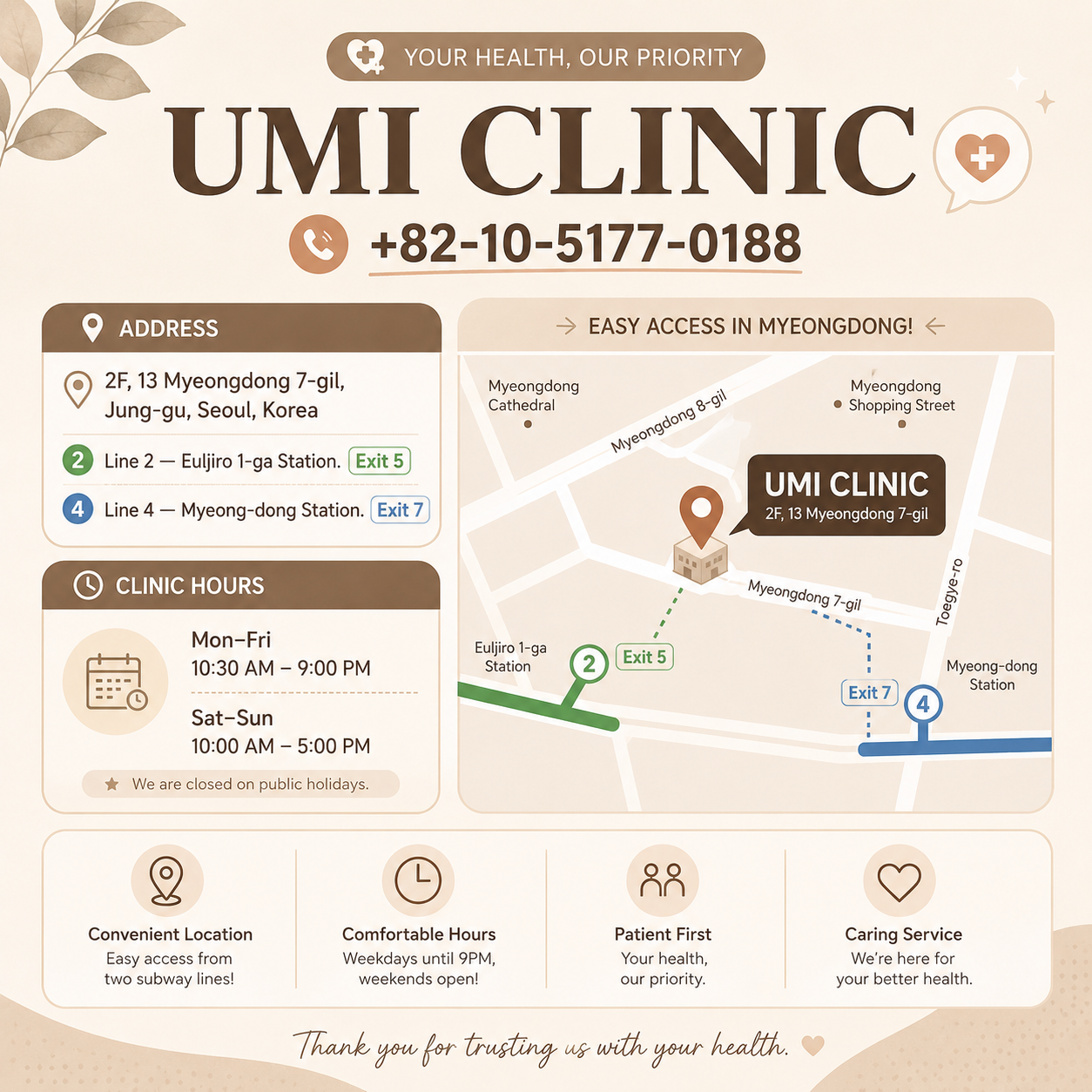
Umi Clinic (우미의원) · 13 Myeongdong 7-gil, Jung-gu, Seoul · Near Myeongdong Station Exit 6 · Directions & hours