Excessive sweating · Myeongdong, Seoul
Hyperhidrosis Treatment in Myeongdong, Seoul
Sweating that soaks through clothes or makes hands slippery is a recognised medical condition. Botulinum toxin injections can reduce it for months at a time.
- Same price as locals
- English-speaking team
- Book on WhatsApp
- 中文 · 日本語
Quick answer
What is hyperhidrosis and how is it treated?
Hyperhidrosis is sweating beyond what the body needs to control temperature. Primary focal hyperhidrosis usually affects the underarms, palms, soles or face symmetrically, often starts in adolescence and is not caused by another illness. Sweating that is new, one-sided or happens at night may have another cause and should be checked by a doctor.
A well-studied option is botulinum toxin injected into the skin, which blocks the nerve signal that switches on sweat glands. At our clinic in Myeongdong, Seoul it takes a short visit — see hyperhidrosis Botox for treatment details.
Medically reviewed by Dr. Yoon Jong-woo , Medical Director, Umi Clinic (Korean-licensed physician) · Updated October 2026. Results vary by person; the doctor explains risks, side effects and alternatives at consultation.
- Session
- 15–30 min
- Numbing
- Cream or ice
- Downtime
- None
- Results
- Within 1–2 weeks
- Lasts
- Often 4–9 months (underarms)
- Pricing
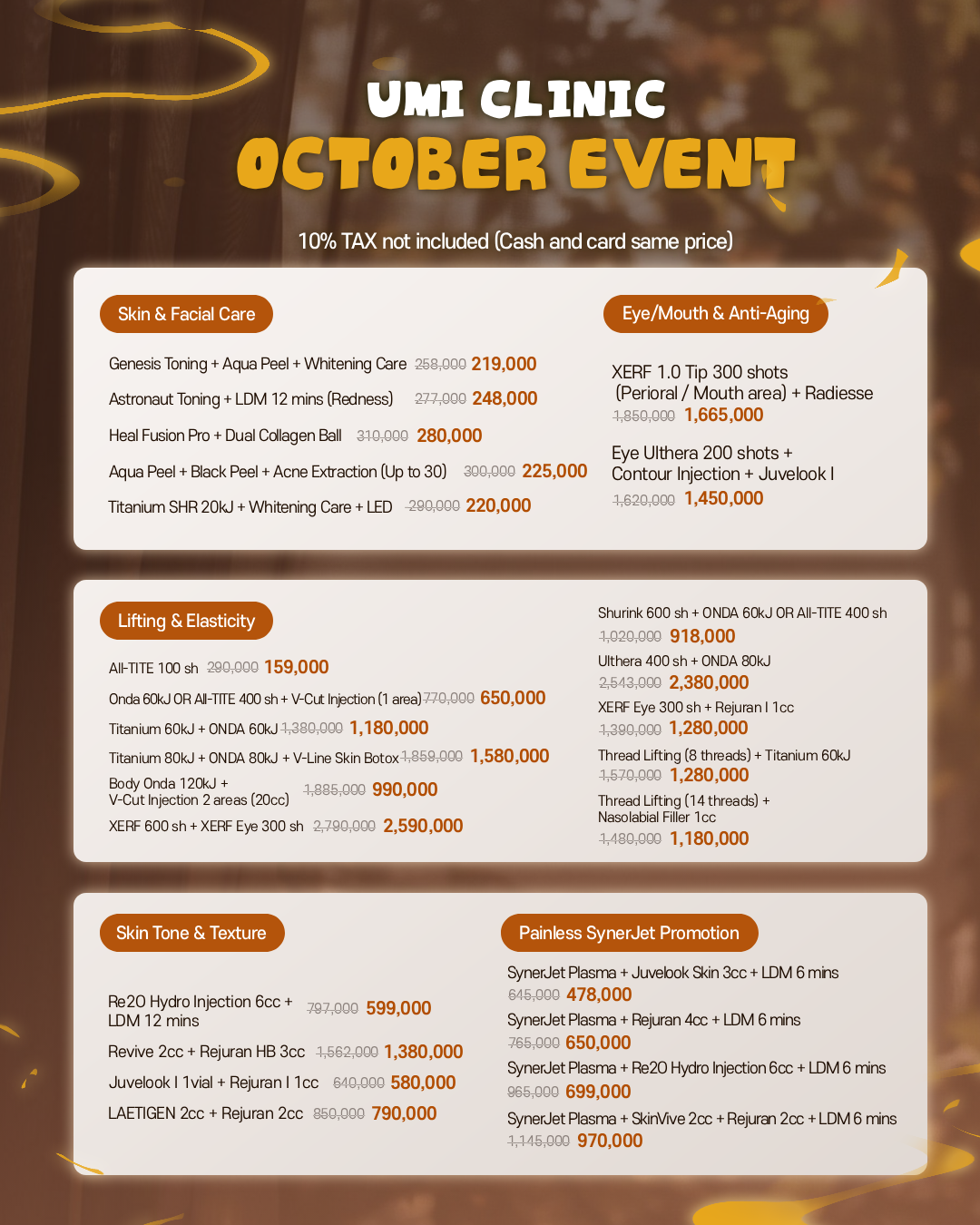
- Same price as locals
Your visit
How Hyperhidrosis works at Umi
Treatment is quick, and you can go straight back to your plans in Seoul.
- Consult & history
The doctor confirms the pattern of sweating and checks for signs of another cause.
- Starch-iodine test (optional)
A simple test can map the most active sweat area to guide injections.
- Intradermal injections
Small amounts of botulinum toxin are placed in a grid about 1–2 cm apart.
- Aftercare
Avoid deodorant, sauna and heavy exercise for 24 hours.
Before & after
How treatment reduces sweating
Botulinum toxin blocks acetylcholine at the sweat glands, so they produce much less sweat until the nerve endings recover.
Sweating begins to reduce.
Full effect: noticeably drier skin.
Gradual return of sweating; repeat when needed.
Is it right for you?
Who Hyperhidrosis suits best
Good fit if you…
- Sweat heavily from the underarms, palms, soles or forehead
- Find antiperspirants are not enough
- Have sweat that affects work, travel or confidence
- Want a non-surgical treatment with no downtime
Consider another option if…
- You are pregnant or breastfeeding
- You have a neuromuscular disease such as myasthenia gravis
- Your sweating is new, one-sided or with fever or weight loss — get medical tests first
- You have infection at the injection site
Recovery & results
What to expect, step by step
- Same day
Small bumps at injection points fade within an hour.
- First week
Sweating starts to reduce in the treated area.
- Weeks 1–2
Full effect is reached.
- 4–9 months
Repeat treatment when sweating returns.
FAQ
Hyperhidrosis questions
Which areas can be treated?
Underarms are most common. Palms, soles and the forehead can also be treated, though palms and soles are more sensitive and may need nerve blocks or extra numbing.
Will I sweat more elsewhere?
Compensatory sweating is a known problem after surgery for hyperhidrosis, but it is uncommon after botulinum toxin injections.
Can palm treatment affect grip?
Temporary mild weakness in the small hand muscles can occur for a few weeks. The doctor adjusts the technique to minimise this.
Are there other options?
Prescription antiperspirants with aluminium chloride, oral medications and topical anticholinergics can help some people. The doctor can discuss these too.
Do foreigners pay more?
No. International patients pay the same price as local patients at Umi Clinic.
Related at Umi Clinic
Explore next
Treatments for sweating
Related concerns
Plan your visit
Ask about Hyperhidrosis in English
Send a photo and your travel dates on WhatsApp — the team replies with a plan and a same-as-locals price.
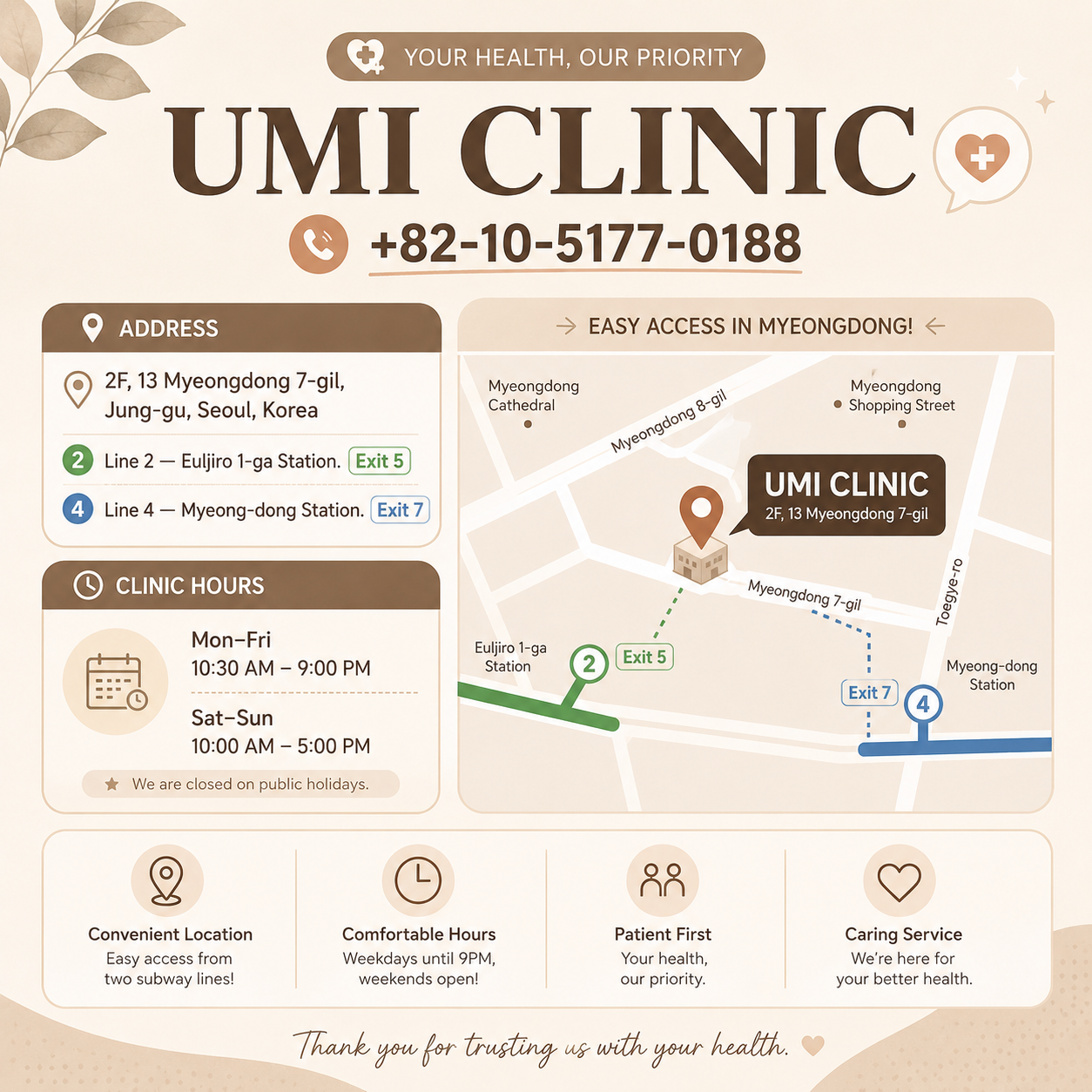
Umi Clinic (우미의원) · 13 Myeongdong 7-gil, Jung-gu, Seoul · Near Myeongdong Station Exit 6 · Directions & hours