Striae on belly, hips, thighs & breasts · Myeongdong, Seoul
Stretch Mark Treatment in Myeongdong, Seoul
Lasers, RF microneedling and skin boosters can fade the colour of stretch marks and soften their texture, especially when they are treated early.
- Same price as locals
- English-speaking team
- Book on WhatsApp
- 中文 · 日本語
Quick answer
What are stretch marks and can they be removed?
Stretch marks ( striae distensae) are linear scars that form when the dermis is stretched faster than it can adapt — during pregnancy, growth spurts, weight change, muscle gain or steroid use. New marks are red or purple (striae rubrae); older ones fade to white or silver and look slightly sunken (striae albae).
They cannot be erased completely, but treatment can make them much less noticeable. At our Myeongdong clinic in Seoul the doctor often combines vascular or fractional lasers with RF microneedling to rebuild collagen in the marks.
Medically reviewed by Dr. Yoon Jong-woo , Medical Director, Umi Clinic (Korean-licensed physician) · Updated October 2026. Results vary by person; the doctor explains risks, side effects and alternatives at consultation.
- Session
- 30–60 min
- Numbing
- Topical cream
- Downtime
- 2–5 days of redness
- Results
- Gradual over 3–6 months
- Lasts
- Long term
- Pricing
- Same price as locals
Your visit
How Stretch mark works at Umi
The plan depends on whether your marks are red (new) or white (mature).
- Consult & mark assessment
The doctor checks the colour, width and age of the marks and your skin type.
- Plan the combination
Red marks usually start with vascular or toning lasers; white marks with fractional laser or RF microneedling.
- Treatment
After numbing, the laser or microneedling device is applied across the marks; boosters may be added.
- Aftercare
Gentle moisturiser, sun protection and no hot baths or scrubbing for a few days.
Before & after
How treatment softens stretch marks
Controlled micro-injury remodels the thin, scarred dermis in each mark, while vascular lasers reduce redness in newer marks.
Redness and tiny scabs or roughness as skin heals.
New collagen fills in the marks; redness fades.
Marks look flatter, narrower and less obvious.
Is it right for you?
Who Stretch mark suits best
Good fit if you…
- Have red or purple stretch marks that are still fresh
- Have white marks and want them to look less noticeable
- Can commit to a series of sessions
- Can protect treated areas from strong sun
Consider another option if…
- You are pregnant or breastfeeding — wait until after
- You are taking isotretinoin or have active infection in the area
- You tend to form keloids — tell the doctor first
- You expect complete removal
Recovery & results
What to expect, step by step
- Same day
Redness, warmth and a sunburn-like feeling.
- First week
Light roughness or tiny scabs that flake off; avoid sun on the area.
- 1–3 months
Next sessions spaced about 4 weeks apart.
- 3–6 months
Colour and texture keep improving after the course.
FAQ
Stretch mark questions
Which works better on stretch marks: laser or microneedling?
Both help. Vascular lasers suit red marks, while fractional lasers and RF microneedling are better for white, sunken marks. Many plans combine them.
Can old white stretch marks improve?
Yes, but more slowly. Texture usually improves more than colour in white marks.
Is it safe for darker skin?
Yes, with careful settings. Darker skin has a higher risk of post-inflammatory pigmentation, so the doctor uses gentler settings and sun protection is essential.
Do creams help?
Early on, tretinoin or centella creams may help red marks a little, but in-clinic treatment gives more visible change.
Do foreigners pay more?
No. International patients pay the same price as local patients at Umi Clinic.
Related at Umi Clinic
Explore next
Treatments for stretch marks
Related body concerns
Plan your visit
Ask about Stretch mark in English
Send a photo and your travel dates on WhatsApp — the team replies with a plan and a same-as-locals price.
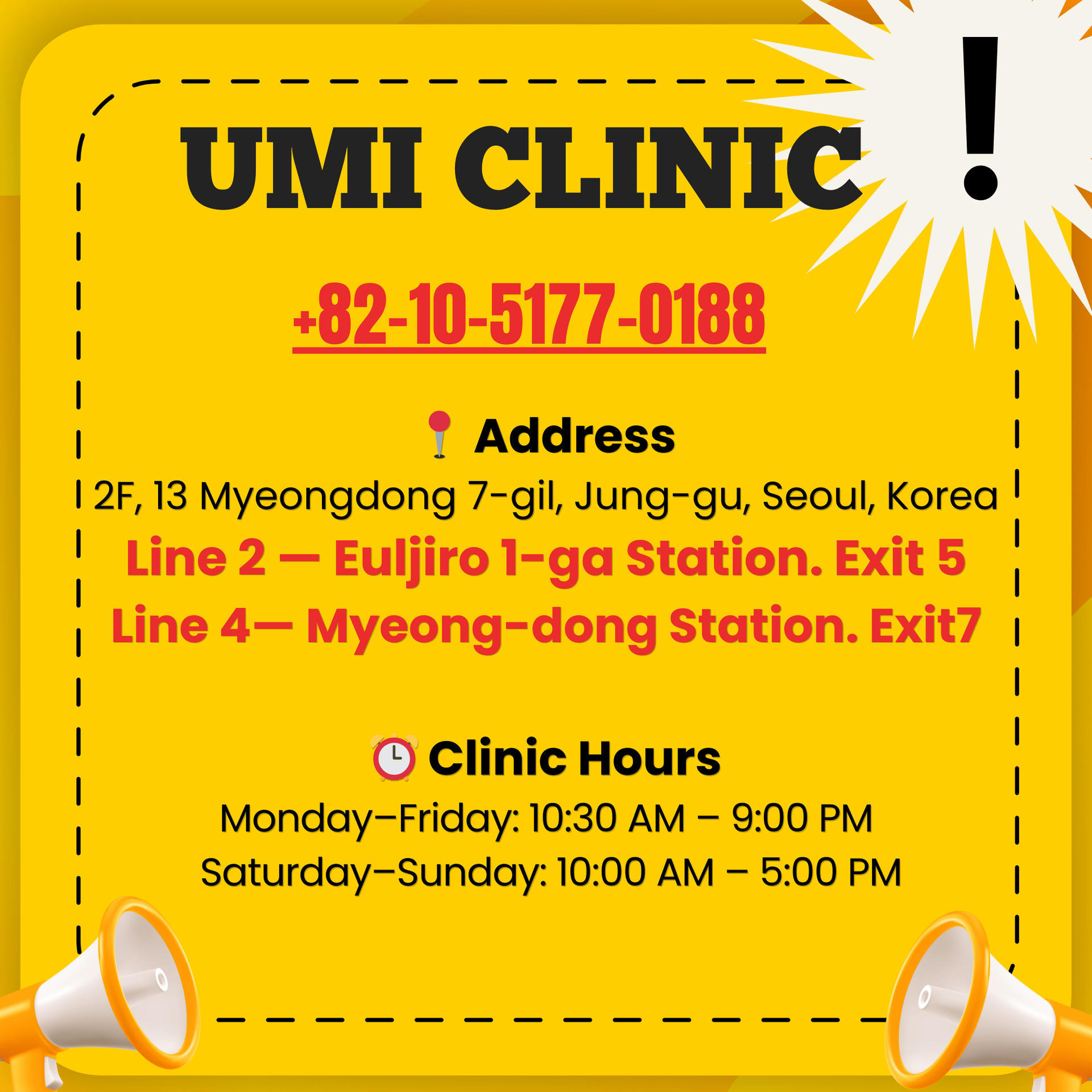
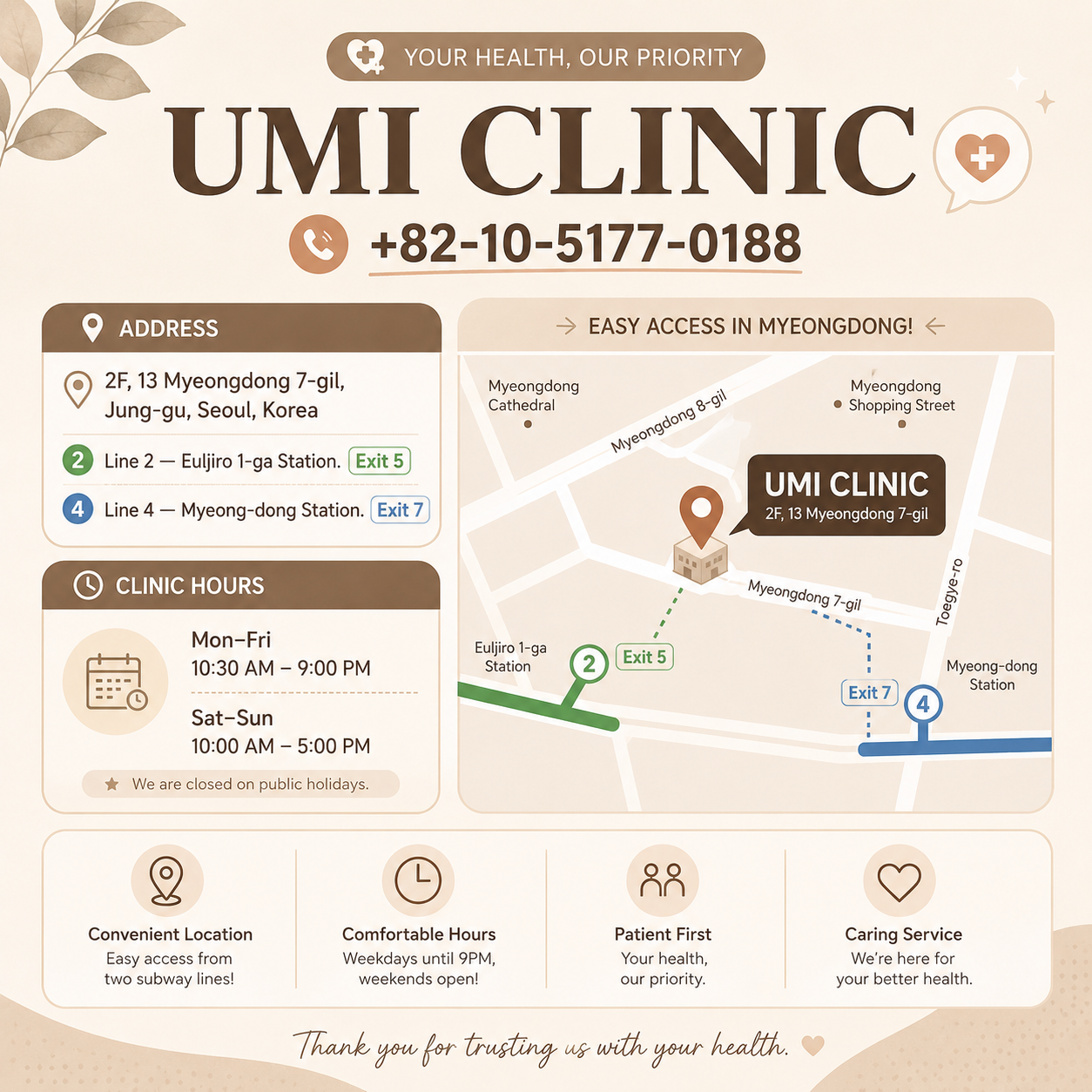
Umi Clinic (우미의원) · 13 Myeongdong 7-gil, Jung-gu, Seoul · Near Myeongdong Station Exit 6 · Directions & hours