Spider veins on the face · Myeongdong, Seoul
Broken capillaries in Myeongdong, Seoul
Clear fine red lines and spider veins around the nose and cheeks with targeted vascular laser — quick sessions, little downtime.
- Same price as locals
- English-speaking team
- Book on WhatsApp
- 中文 · 日本語
Quick answer
What are broken capillaries and how are they treated?
Broken capillaries ( telangiectasia) are small, permanently widened blood vessels visible as fine red or purple lines, often around the nose, cheeks and chin. They are linked to genetics, sun damage, rosacea and temperature extremes. Vascular laser heats the vessel so it closes and is reabsorbed.
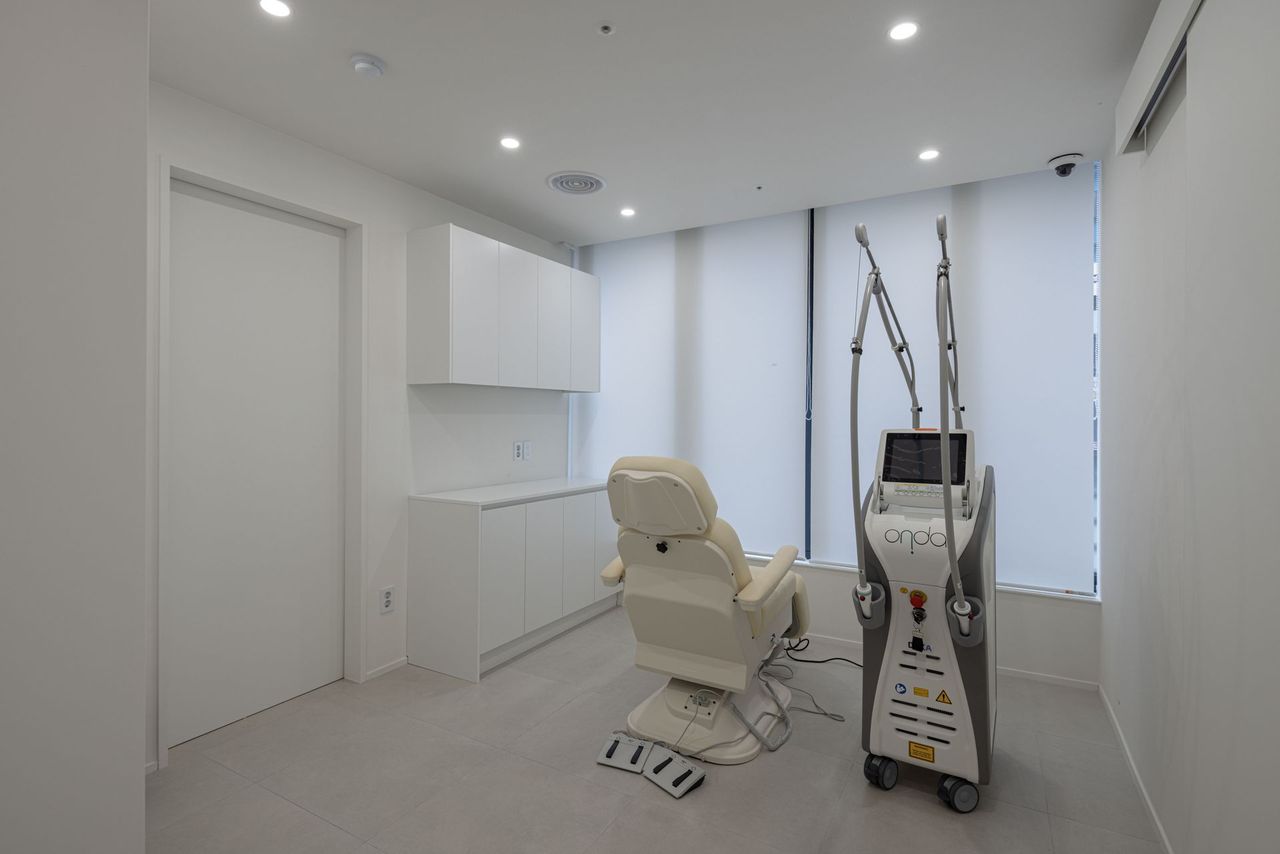
At our Myeongdong clinic, Excel V or IPL is chosen by vessel size and depth. Most people see clear improvement in one to three sessions.
Medically reviewed by Dr. Yoon Jong-woo , Medical Director, Umi Clinic (Korean-licensed physician) · Updated October 2026. Results vary by person; the doctor explains risks, side effects and alternatives at consultation.
- Session
- 15–30 min
- Numbing
- Not usually needed
- Downtime
- Mild redness 1–2 days
- Results
- Fading over 2–6 weeks
- Plan
- 1–3 sessions, 4 weeks apart
- Pricing
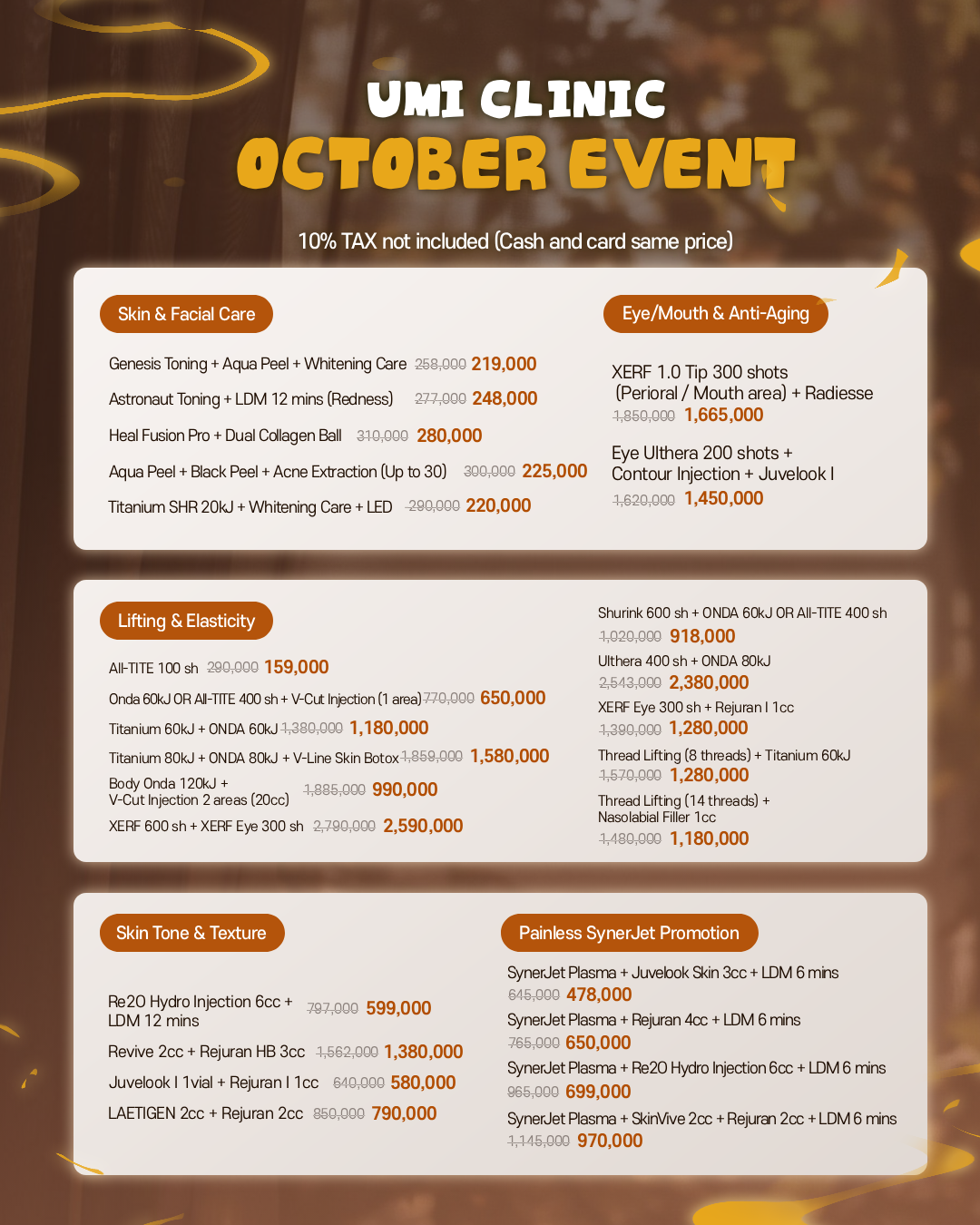
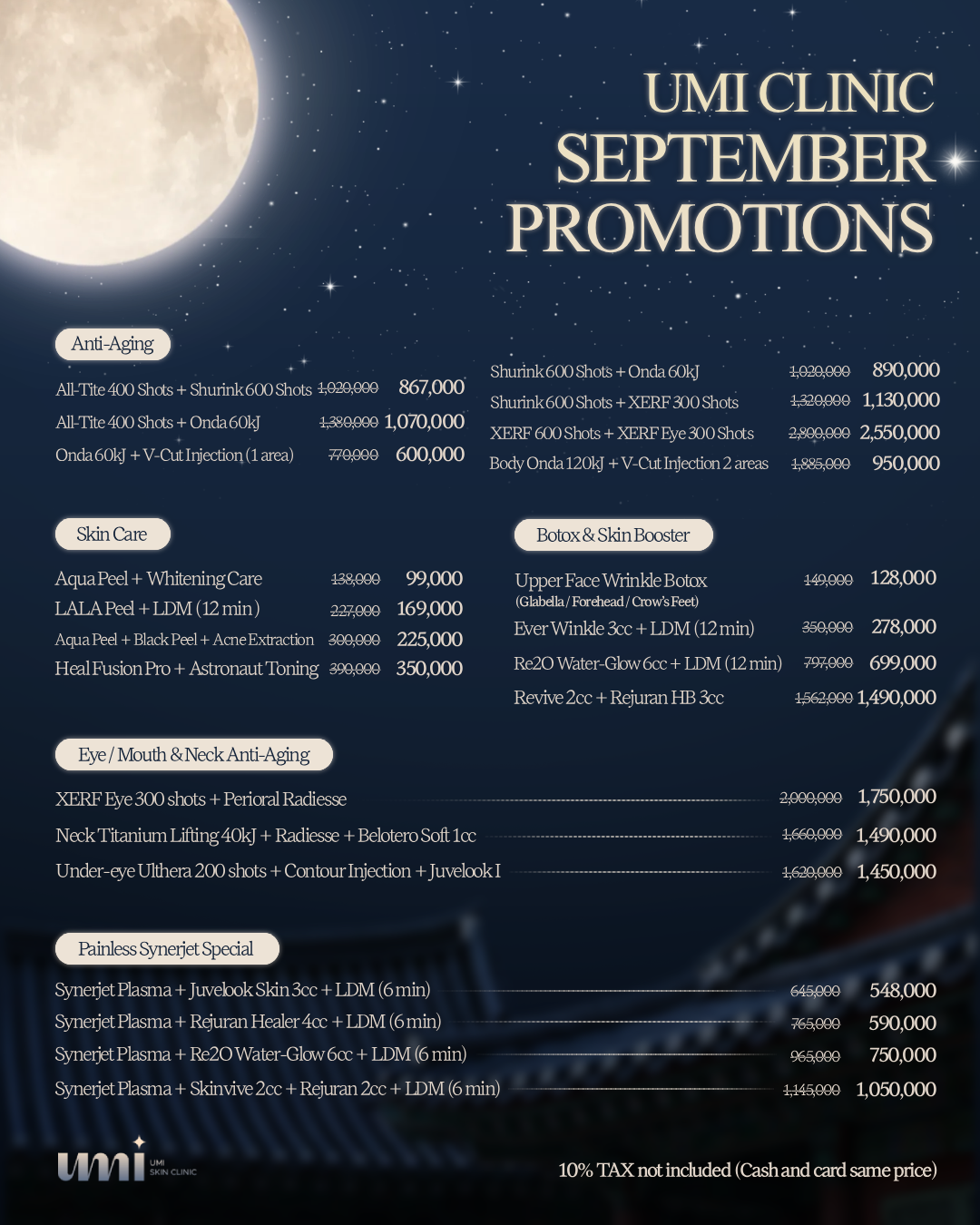
- Same price as locals
Your visit
How Broken capillaries works at Umi
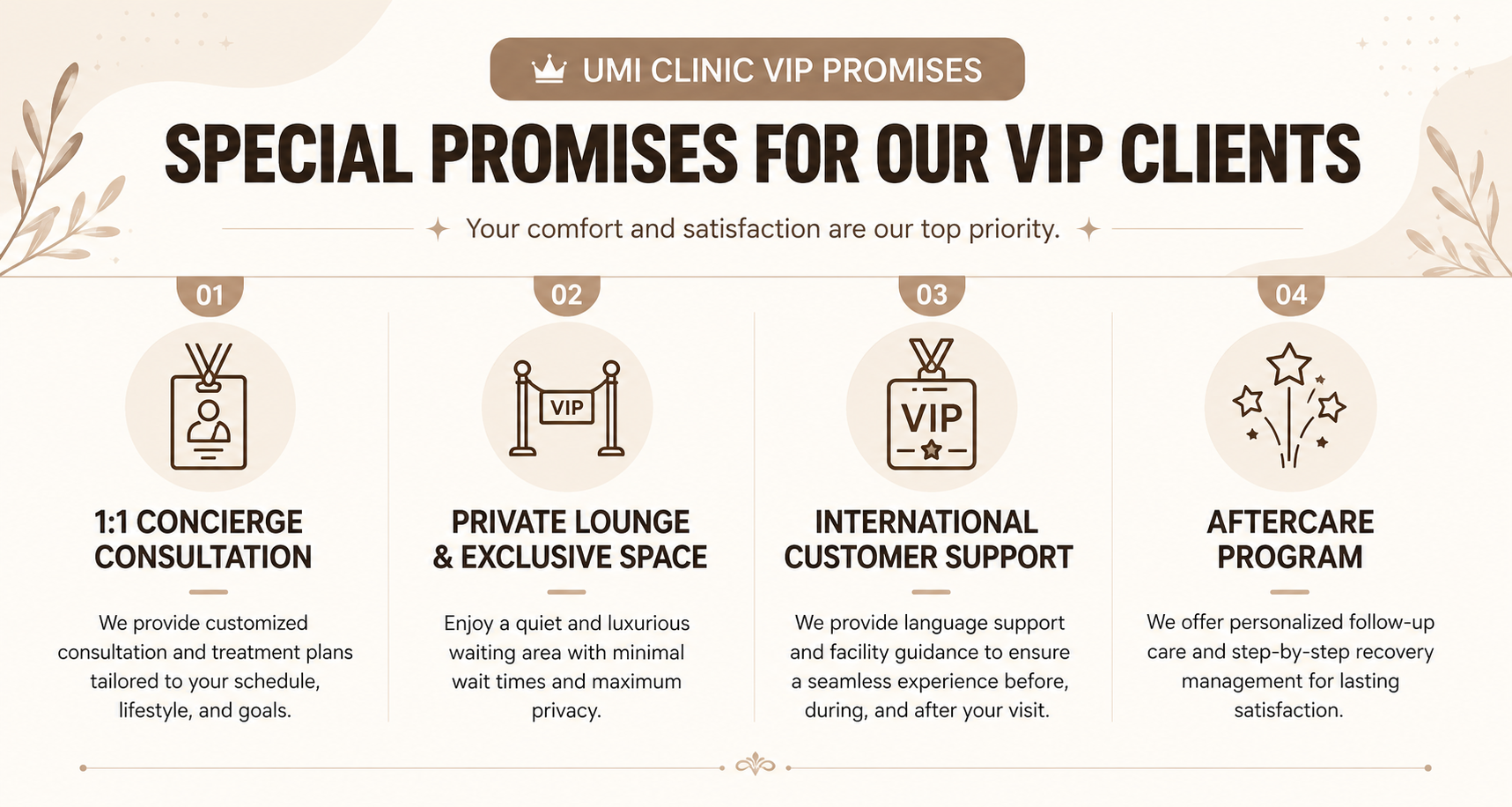
Every visit is doctor-led and explained in English, from the first skin check to aftercare.
- Vessel assessment
The doctor maps vessel size and checks for rosacea or other triggers.
- Cooling
The skin is cooled to protect the surface.
- Vascular laser
Precise pulses trace each vessel; small ones vanish immediately.
- Aftercare
Cool compress, no hot baths, saunas or alcohol for a couple of days, SPF.
Before & after
How visible vessels close and fade
Laser light is absorbed by blood in the vessel, which seals it; the body then gradually clears it, leaving more even skin.
Some vessels disappear; others look darker.
Treated vessels fade as they are reabsorbed.
Clearer skin; a top-up for remaining vessels.
Is it right for you?
Who Broken capillaries suits best
Good fit if you…
- You have fine red lines around the nose, cheeks or chin
- Redness is from visible vessels rather than flushing alone
- You want quick sessions with little downtime
- You can avoid heat and strong sun briefly
Consider another option if…
- You have a fresh tan (higher risk of side effects)
- You take medication that causes light sensitivity — discuss first
- Red patches are scaly or itchy — may be a different condition
- You are pregnant
Recovery & results
What to expect, step by step
- Same day
Mild redness or swelling; occasional slight bruising.
- 1–2 days
Redness settles; make-up the next day.
- 2–6 weeks
Treated vessels fade progressively.
- Long term
New vessels can form with sun and heat; SPF helps.
FAQ
Broken capillaries questions
Do broken capillaries come back?
Treated vessels usually stay closed, but new ones can form over time, especially with sun, heat or rosacea.
Is vascular laser painful?
Most people describe a quick snap like a rubber band; cooling keeps it comfortable.
Can capillaries on the legs be treated too?
Facial vessels respond best. Leg veins are different and may need other treatment; ask during your consultation.
Will I bruise?
Bruising is uncommon with standard settings and settles within a week if it happens.
Do foreigners pay more?
No. International patients pay the same price as local patients at Umi Clinic.
Related at Umi Clinic
Explore next
Treatments that help
Related concerns
Plan your visit
Ask about Broken capillaries in English
Send a photo and your travel dates on WhatsApp — the team replies with a plan and a same-as-locals price.
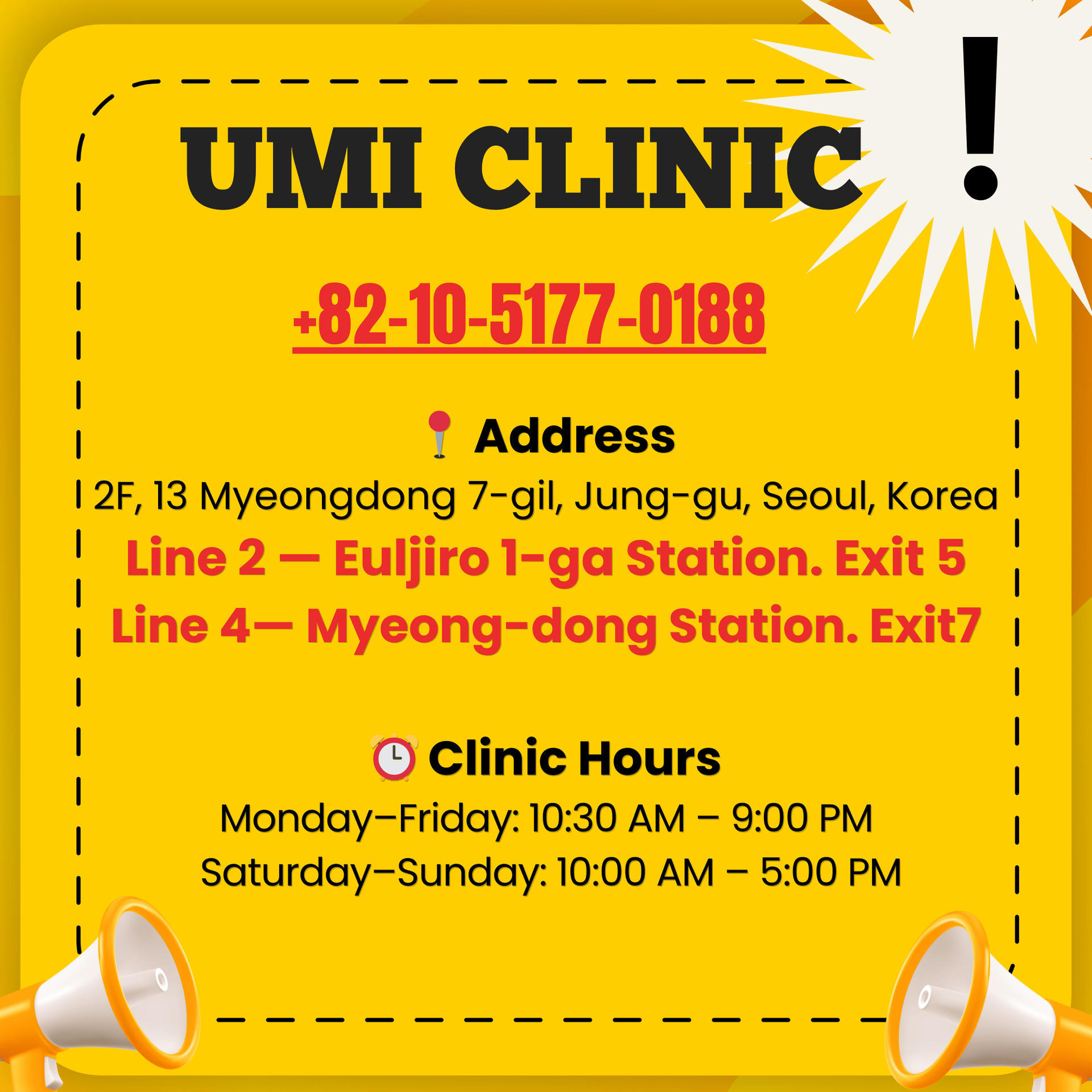
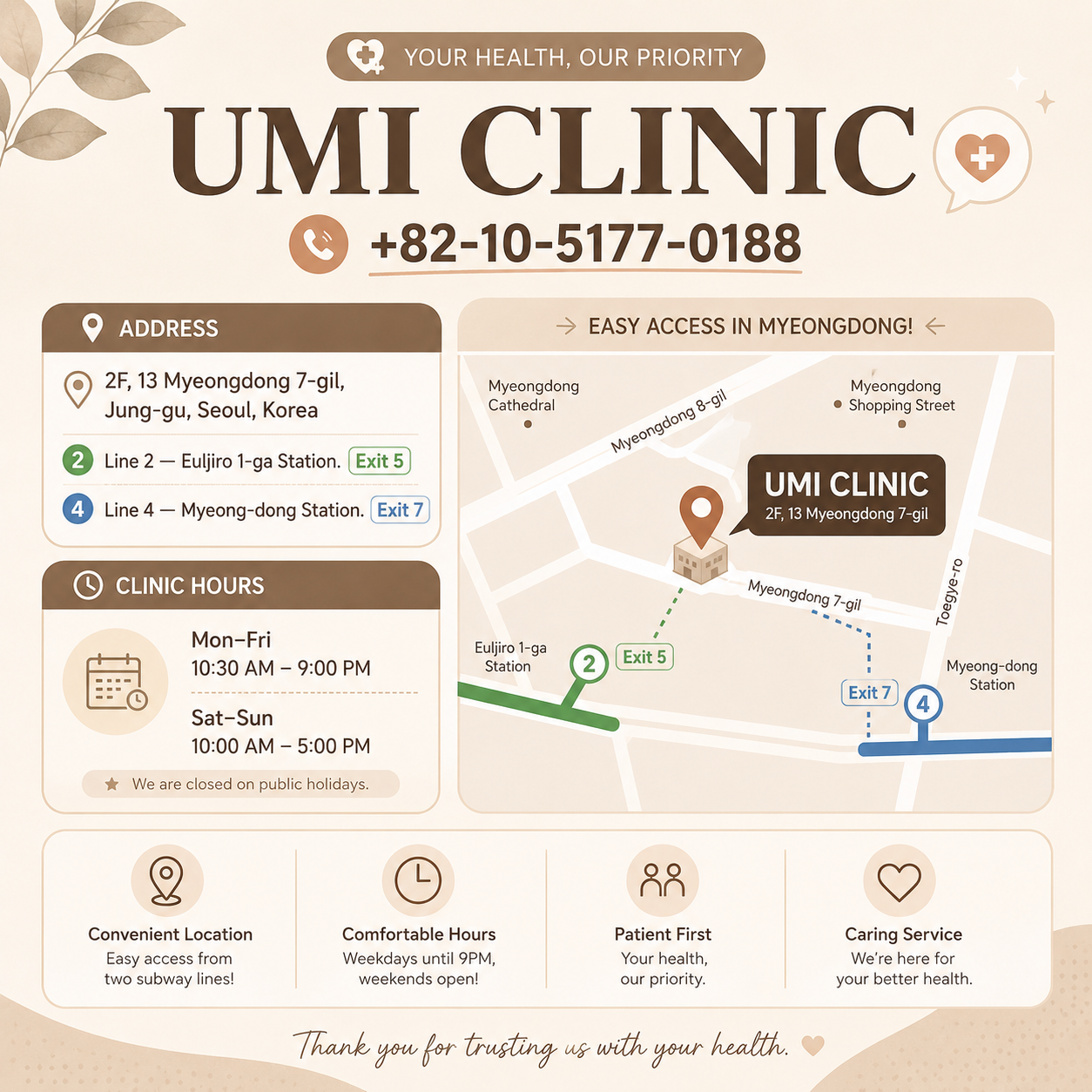
Umi Clinic (우미의원) · 13 Myeongdong 7-gil, Jung-gu, Seoul · Near Myeongdong Station Exit 6 · Directions & hours