Atopic dermatitis care · Myeongdong, Seoul
Eczema care in Myeongdong, Seoul
Calm itchy, dry, inflamed skin with a doctor-led plan: barrier repair, medical treatment for flares and gentle soothing care.
- Same price as locals
- English-speaking team
- Book on WhatsApp
- 中文 · 日本語
Quick answer
What is eczema and how is it treated?
Eczema, most often atopic dermatitis, is a chronic condition where the skin barrier is weak and the immune system overreacts, causing dry, itchy, red or rough patches that flare and settle. It is not contagious. Treatment calms the flare, repairs the barrier and reduces triggers.
For visitors to Seoul, a doctor can assess a flare, prescribe appropriate creams and suggest gentle supportive care such as a soothing facial once skin is calm. Cosmetic lasers and peels are avoided on active eczema.
Medically reviewed by Dr. Yoon Jong-woo , Medical Director, Umi Clinic (Korean-licensed physician) · Updated October 2026. Results vary by person; the doctor explains risks, side effects and alternatives at consultation.
- Visit
- 15–30 min consult
- Numbing
- Not needed
- Downtime
- None
- Results
- Itch eases in days
- Plan
- Flare care + maintenance
- Pricing
- Same price as locals
Your visit
How Eczema works at Umi
Every visit is doctor-led and explained in English, from the first skin check to aftercare.
- Medical consult
The doctor examines the skin, history and triggers such as heat, sweat or products.
- Flare treatment
Prescription anti-inflammatory creams and anti-itch measures if needed.
- Barrier repair
Ceramide moisturisers, short lukewarm showers, fragrance-free products.
- Follow-up
Advice for travel and home; soothing care once skin is calm.
Before & after
How eczema skin calms and recovers
Reducing inflammation stops the itch-scratch cycle, and restoring lipids in the barrier keeps moisture in and irritants out.
Itch and redness begin to ease.
Patches flatten and dryness improves.
Barrier is stronger; fewer flares with good care.
Is it right for you?
Who Eczema suits best
Good fit if you…
- You have itchy, dry or red patches that come and go
- Your eczema flared during travel, heat or a change of climate
- You need medical advice and prescription creams
- You want gentle skin care that will not trigger flares
Consider another option if…
- Skin is weeping, crusted or painful — possible infection needing prompt care
- You have a fever with a spreading rash — seek urgent care
- You want lasers or strong peels on active patches
- You need long-term specialist immune treatment — continue with your home dermatologist
Recovery & results
What to expect, step by step
- First days
Itch and redness start to settle with treatment.
- 1–2 weeks
Patches calm; keep moisturising generously.
- Ongoing
Daily barrier care helps reduce flares.
- If it flares
Restart the flare plan early, as advised by the doctor.
FAQ
Eczema questions
Is eczema contagious?
No. Eczema cannot be passed to others, though infected eczema needs treatment.
Why did my eczema flare in Korea?
Changes in climate, dry heating, hot water, sweat, new products and stress commonly trigger flares while travelling.
Are steroid creams safe?
Used as directed for short periods, prescription creams are safe and effective. The doctor will explain the right strength and duration.
Can I get facials or laser with eczema?
Only gentle, fragrance-free care on calm skin. Lasers and peels are avoided on active eczema.
Do foreigners pay more?
No. International patients pay the same price as local patients at Umi Clinic.
Related at Umi Clinic
Explore next
Treatments that help
Related concerns
Plan your visit
Ask about Eczema in English
Send a photo and your travel dates on WhatsApp — the team replies with a plan and a same-as-locals price.
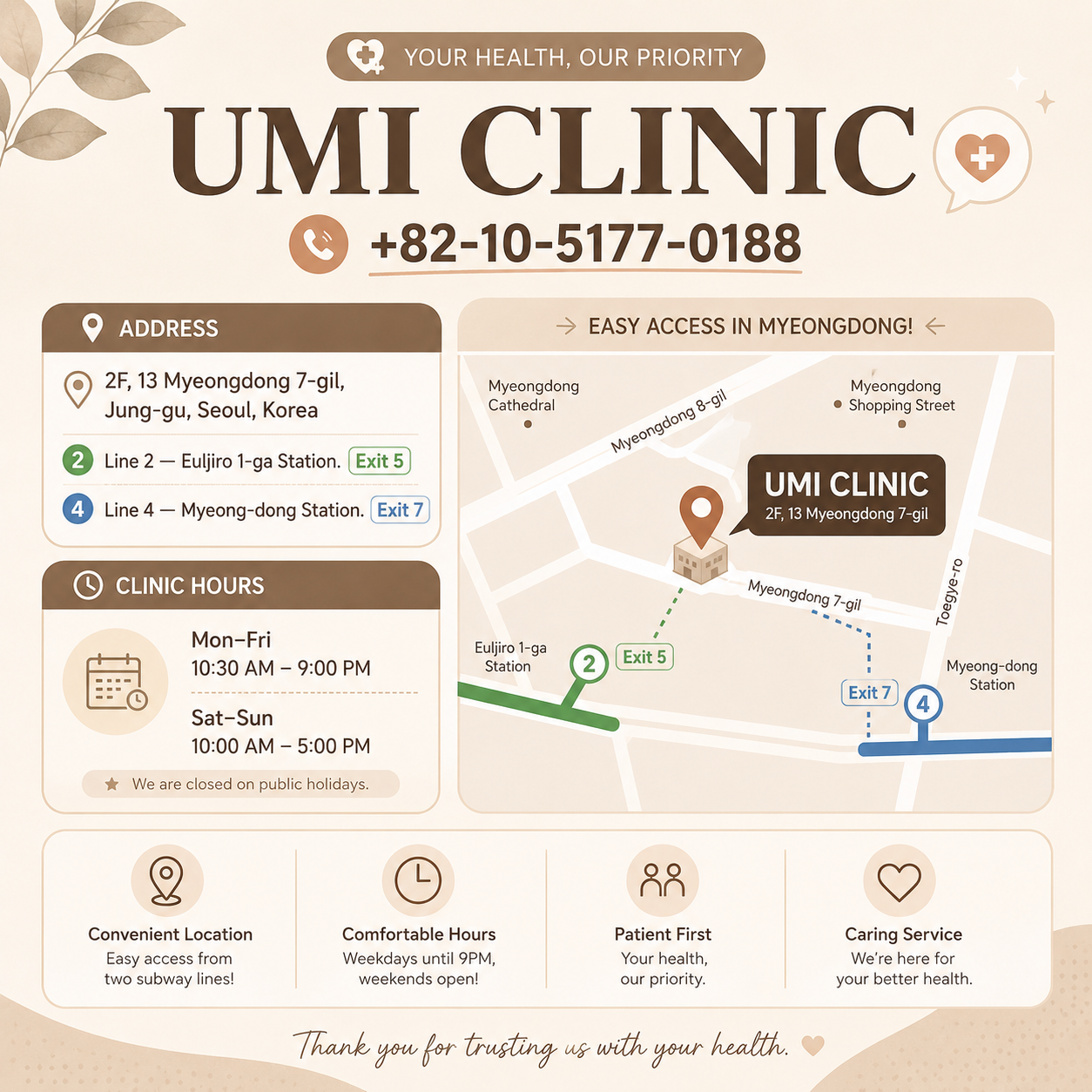
Umi Clinic (우미의원) · 13 Myeongdong 7-gil, Jung-gu, Seoul · Near Myeongdong Station Exit 6 · Directions & hours