Chicken skin on arms & thighs · Myeongdong, Seoul
Keratosis pilaris in Myeongdong, Seoul
Smooth the small rough bumps on the arms, thighs and cheeks — with exfoliating peels, gentle laser for redness and a routine that works.
- Same price as locals
- English-speaking team
- Book on WhatsApp
- 中文 · 日本語
Quick answer
What is keratosis pilaris and can it be treated?
Keratosis pilaris (KP), often called chicken skin, is a common, harmless condition where keratin plugs block hair follicles, creating small rough bumps, sometimes red or brown, on the upper arms, thighs, buttocks or cheeks. It cannot be cured permanently, but it can be smoothed and kept under control.
Clinic care in Seoul combines exfoliating peels, gentle laser for redness and, when hair is involved, laser hair removal, plus daily creams with urea or lactic acid.
Medically reviewed by Dr. Yoon Jong-woo , Medical Director, Umi Clinic (Korean-licensed physician) · Updated October 2026. Results vary by person; the doctor explains risks, side effects and alternatives at consultation.
- Session
- 20–40 min
- Numbing
- Not usually needed
- Downtime
- None to minimal
- Results
- Smoother in 2–6 weeks
- Plan
- 3–6 sessions, 2–4 weeks apart
- Pricing
- Same price as locals
Your visit
How Keratosis pilaris works at Umi
Every visit is doctor-led and explained in English, from the first skin check to aftercare.
- Diagnosis
The doctor confirms KP and checks for related dryness or eczema.
- Exfoliating peel
A body peel loosens the keratin plugs in the follicles.
- Laser if needed
IPL or vascular laser for redness; hair removal laser where helpful.
- Home routine
Urea or lactic acid lotion daily, lukewarm showers, no harsh scrubbing.
Before & after
How KP bumps become smoother
Dissolving the keratin plugs and keeping skin hydrated lets follicles open normally, so bumps flatten and redness calms.
Skin feels softer after the first peel.
Bumps flatten with daily keratolytic cream.
Smoother texture and less redness.
Is it right for you?
Who Keratosis pilaris suits best
Good fit if you…
- You have rough bumps on the upper arms, thighs or cheeks
- Bumps are red or brown and bother you in summer clothes
- Over-the-counter scrubs have not helped
- You can keep up a simple daily routine
Consider another option if…
- Bumps are itchy pustules — may be folliculitis or acne
- You have active eczema on the area — treat it first
- You have broken or sunburnt skin
- You expect a permanent cure
Recovery & results
What to expect, step by step
- Same day
Mild tingling or redness after a peel.
- First week
Slight dryness; moisturise twice daily.
- 2–6 weeks
Smoother skin with sessions and home care.
- Maintenance
KP returns without care — keep using the lotion.
FAQ
Keratosis pilaris questions
Is keratosis pilaris contagious?
No. It is a harmless, often inherited skin condition.
Will KP go away?
It often improves with age and in humid weather, but treatment controls it rather than curing it.
Can I treat KP on my face?
Yes, with gentler peels and laser for redness, adjusted for facial skin.
Should I scrub the bumps?
No. Harsh scrubbing irritates skin and can make redness worse; chemical exfoliants work better.
Do foreigners pay more?
No. International patients pay the same price as local patients at Umi Clinic.
Related at Umi Clinic
Explore next
Treatments that help
Related concerns
Plan your visit
Ask about Keratosis pilaris in English
Send a photo and your travel dates on WhatsApp — the team replies with a plan and a same-as-locals price.
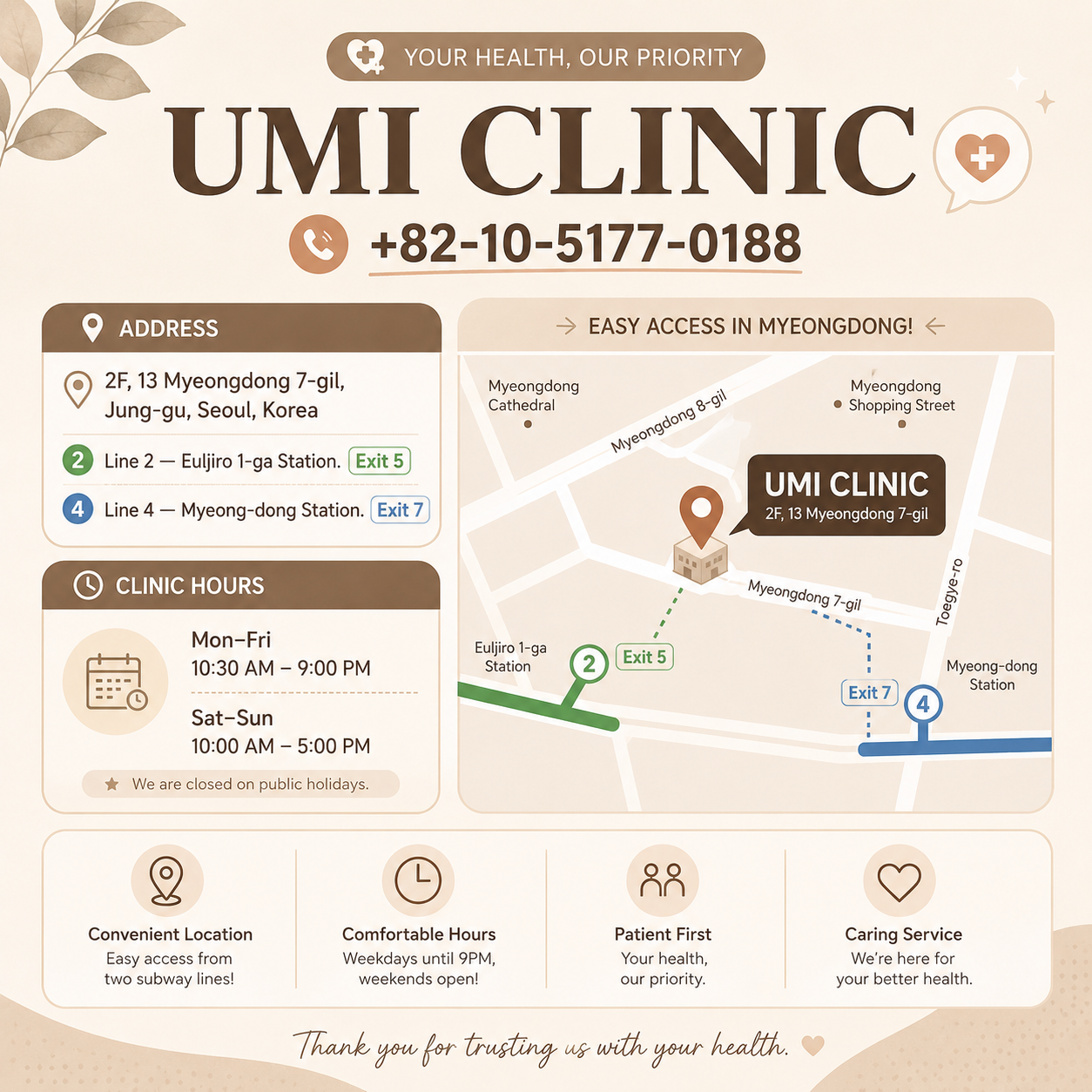
Umi Clinic (우미의원) · 13 Myeongdong 7-gil, Jung-gu, Seoul · Near Myeongdong Station Exit 6 · Directions & hours