Nose-to-mouth lines · Myeongdong, Seoul
Nasolabial fold treatment in Myeongdong, Seoul
Soften deep nose-to-mouth lines by restoring cheek support, filling the fold and tightening skin, for a balanced result rather than an overfilled one.
- Same price as locals
- English-speaking team
- Book on WhatsApp
- 中文 · 日本語
Quick answer
What are nasolabial folds and how are they treated?
Nasolabial folds are the lines running from the sides of the nose to the corners of the mouth. Everyone has them; they deepen as midface fat pads lose volume and descend, cheek skin loosens and bone support changes with age.
Good treatment looks at the cause, not just the line. Restoring midcheek support often softens the fold more naturally than filling it alone, while nasolabial fold filler, collagen stimulators or HIFU address the remaining depth.
Medically reviewed by Dr. Yoon Jong-woo , Medical Director, Umi Clinic (Korean-licensed physician) · Updated October 2026. Results vary by person; the doctor explains risks, side effects and alternatives at consultation.
- Session
- 30–45 min
- Numbing
- Cream; lidocaine in filler
- Downtime
- Mild swelling 1–3 days
- Results
- Immediate to 3 months
- Lasts
- About 9–18 months
- Pricing
- Same price as locals
Your visit
How Nasolabial folds works at Umi
Every visit is doctor-led and explained in English, from the first skin check to aftercare.
- Facial balance check
The doctor assesses cheek volume, skin laxity and fold depth at rest and when smiling.
- Support before filling
Cheek support or lifting comes first if midface descent is the main cause.
- Precise placement
Hyaluronic acid filler or a stimulator is placed with a fine needle or blunt cannula.
- Aftercare
No massaging the area, alcohol or saunas for 24–48 hours.
Before & after
How nasolabial folds are softened
Replacing lost support in the midface and the fold itself lifts the shadow, so the line looks softer without changing your smile.
The fold looks softer straight away after filler.
Swelling settles and the filler integrates naturally.
Collagen stimulators or HIFU add gradual support.
Is it right for you?
Who Nasolabial folds suits best
Good fit if you…
- Have folds that look deeper than they used to
- See shadows from nose to mouth in photos or overhead light
- Want a natural result without looking overfilled
- Have mild volume loss in the midface
Consider another option if…
- You are pregnant or breastfeeding
- You have an active cold sore, acne or infection near the mouth
- You have had permanent filler in the area (needs careful assessment)
- You want the fold erased completely — some line is natural
Recovery & results
What to expect, step by step
- Same day
Mild swelling or tenderness; possibly a small bruise at injection points.
- First week
Swelling settles; avoid dental work and pressure on the face.
- 2–4 weeks
Final filler result; a review can fine-tune symmetry.
- 9–18 months
Top up as filler gradually breaks down.
FAQ
Nasolabial folds questions
Should the fold itself be filled?
Sometimes, but often only partly. If the cheek has dropped, adding support higher up looks more natural than putting a lot of filler into the fold.
Which filler is used?
Smooth, flexible hyaluronic acid fillers from established brands such as Juvederm, Restylane or Belotero. The doctor will show you the product before treatment.
Can filler be dissolved?
Yes. Hyaluronic acid filler can be dissolved with hyaluronidase if needed.
Are there non-filler options?
Yes. HIFU, RF lifting, threads or collagen stimulators can soften folds caused mainly by sagging.
Do foreigners pay more?
No. International patients pay the same price as local patients at Umi Clinic.
Related at Umi Clinic
Explore next
Treatments for nasolabial folds
Related concerns
Plan your visit
Ask about Nasolabial folds in English
Send a photo and your travel dates on WhatsApp — the team replies with a plan and a same-as-locals price.
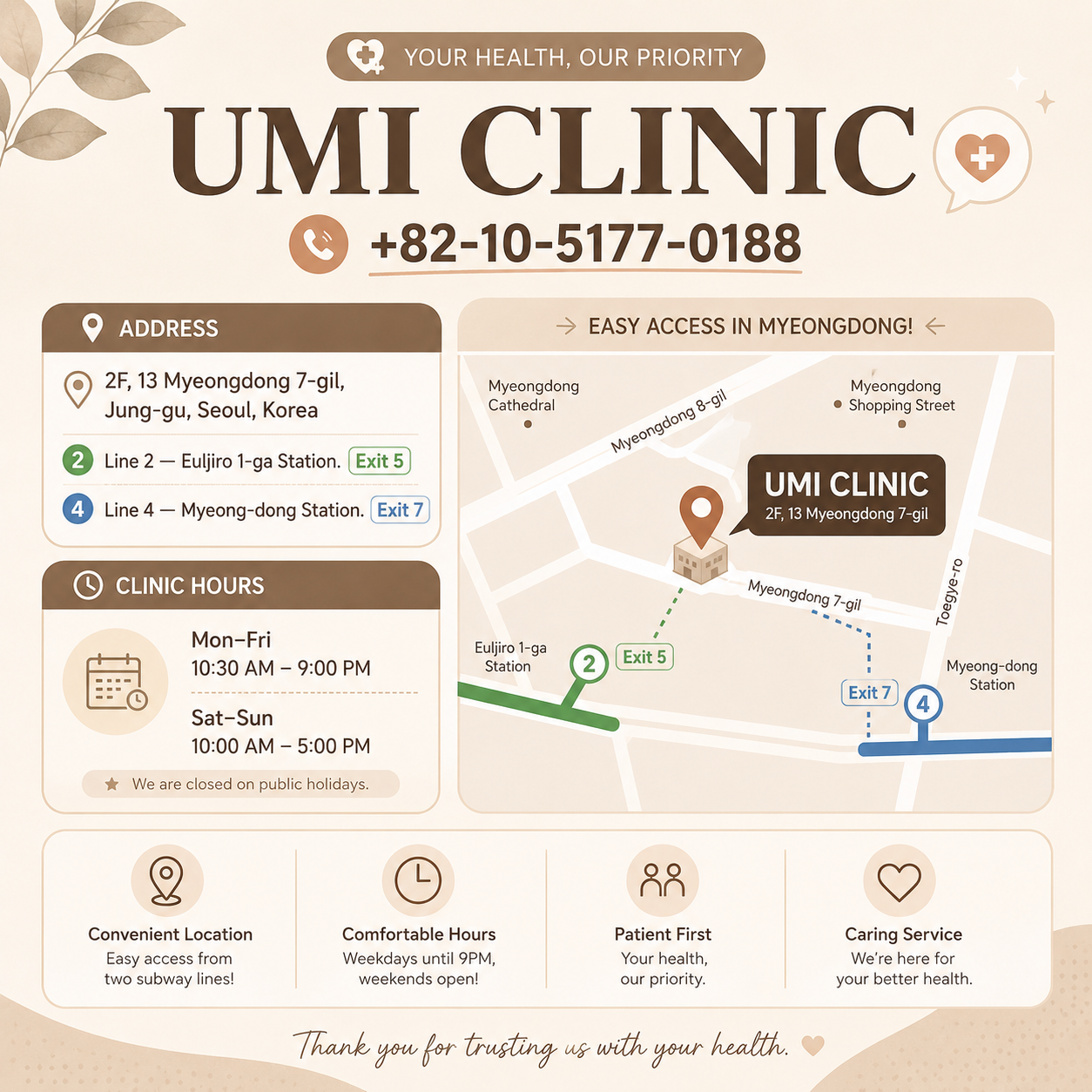
Umi Clinic (우미의원) · 13 Myeongdong 7-gil, Jung-gu, Seoul · Near Myeongdong Station Exit 6 · Directions & hours