Red acne marks (PIE) · Myeongdong, Seoul
Red acne marks (PIE) in Myeongdong, Seoul
Fade the pink and red marks left after acne with vascular laser and IPL — faster than waiting for them to clear on their own.
- Same price as locals
- English-speaking team
- Book on WhatsApp
- 中文 · 日本語
Quick answer
What is post-inflammatory erythema (PIE)?
PIE is the pink, red or purplish flat mark left after a pimple heals. It is caused by small, dilated blood vessels in the healing skin, not by pigment — so brown-spot treatments do not help much. Vascular laser and IPL target the redness directly.
A simple test: if the mark briefly turns pale when pressed, it is likely PIE. Many visitors to Seoul combine PIE treatment with acne control, because new breakouts keep creating new marks. Brown marks are treated as post-acne hyperpigmentation instead.
Medically reviewed by Dr. Yoon Jong-woo , Medical Director, Umi Clinic (Korean-licensed physician) · Updated October 2026. Results vary by person; the doctor explains risks, side effects and alternatives at consultation.
- Session
- 20–30 min
- Numbing
- Usually not needed
- Downtime
- None to mild redness
- Results
- Fading over 2–8 weeks
- Plan
- 3–5 sessions, 2–4 weeks apart
- Pricing
- Same price as locals
Your visit
How PIE works at Umi
Every visit is doctor-led and explained in English, from the first skin check to aftercare.
- Mark assessment
The doctor confirms the marks are red (vascular) rather than brown or scarred.
- Acne control
Active breakouts are treated so new marks stop forming.
- Vascular laser or IPL
Excel V, IPL or similar targets the small vessels behind the redness.
- Aftercare
Gentle skincare, no picking, SPF to stop marks lingering.
Before & after
How red marks fade faster
Light energy is absorbed by the dilated vessels under each mark, which then shrink, so the redness fades sooner than it would naturally.
Marks may look a little darker or pinker briefly.
Redness noticeably softer.
Many marks blend in after a course.
Is it right for you?
Who PIE suits best
Good fit if you…
- You have flat pink or red marks after acne
- Marks blanch when pressed
- Acne is now mostly controlled
- You want faster fading than waiting months
Consider another option if…
- Your marks are brown — that is hyperpigmentation
- Marks are indented — those are acne scars
- You have very active acne — control it first
- You have a recent tan or sunburn
Recovery & results
What to expect, step by step
- Same day
Mild redness or slight swelling that settles within hours.
- First week
Marks may look a little more visible before fading.
- 2–8 weeks
Redness fades progressively with each session.
- Ongoing
Preventing new breakouts keeps skin clear.
FAQ
PIE questions
Will PIE go away on its own?
Often yes, but it can take many months. Vascular laser or IPL usually speeds things up considerably.
What is the difference between PIE and PIH?
PIE is red from blood vessels; PIH is brown from pigment. They need different treatments, and some people have both.
Can I treat PIE if I still have acne?
Yes, but it works best when acne is controlled. The doctor can treat both together.
Do skincare products help PIE?
Gentle care, niacinamide and sunscreen help a little; avoid picking and harsh scrubs, which make redness worse.
Do foreigners pay more?
No. International patients pay the same price as local patients at Umi Clinic.
Related at Umi Clinic
Explore next
Treatments that help
Related concerns
Plan your visit
Ask about PIE in English
Send a photo and your travel dates on WhatsApp — the team replies with a plan and a same-as-locals price.
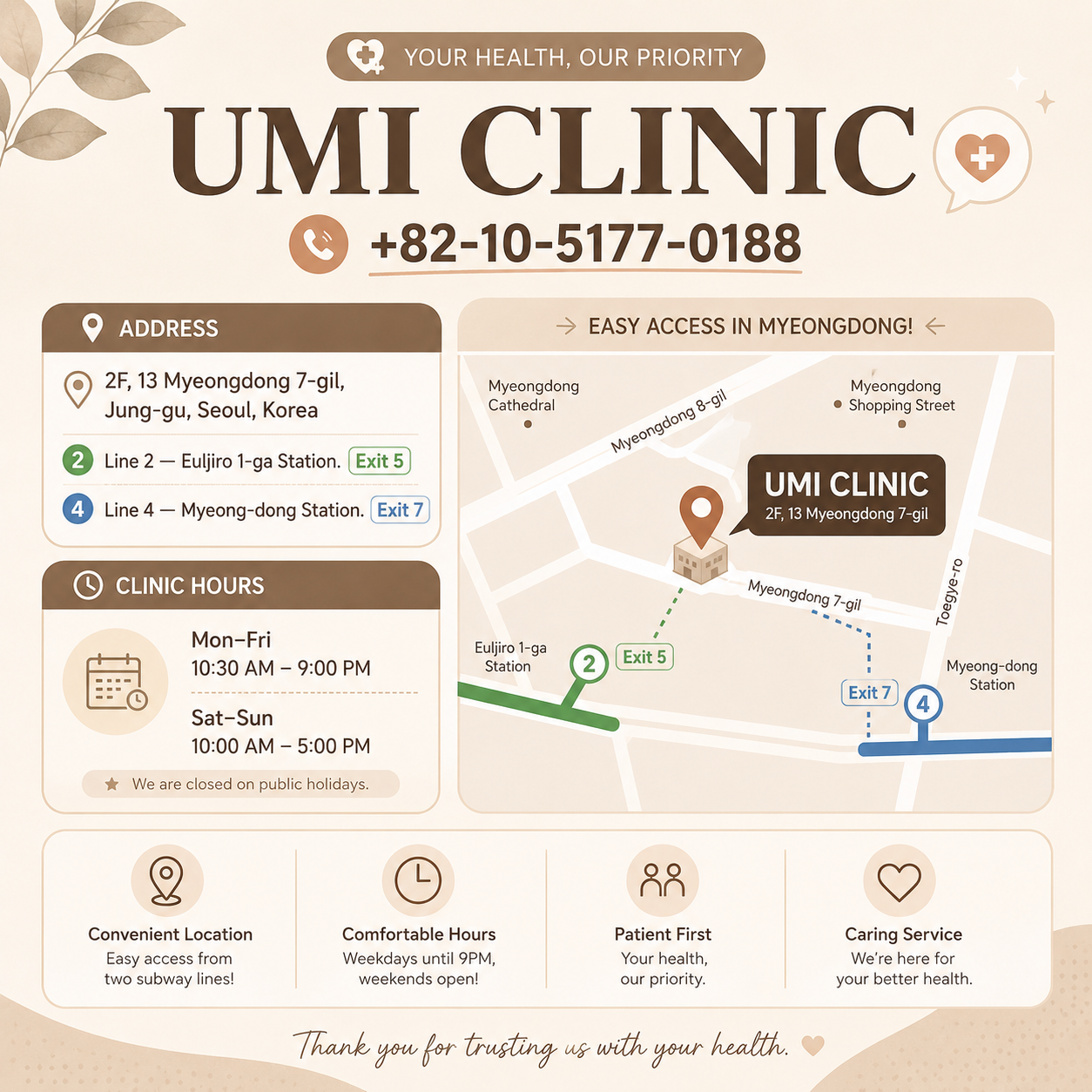
Umi Clinic (우미의원) · 13 Myeongdong 7-gil, Jung-gu, Seoul · Near Myeongdong Station Exit 6 · Directions & hours