Under-eye puffiness & eye bags · Myeongdong, Seoul
Puffy eye treatment in Myeongdong, Seoul
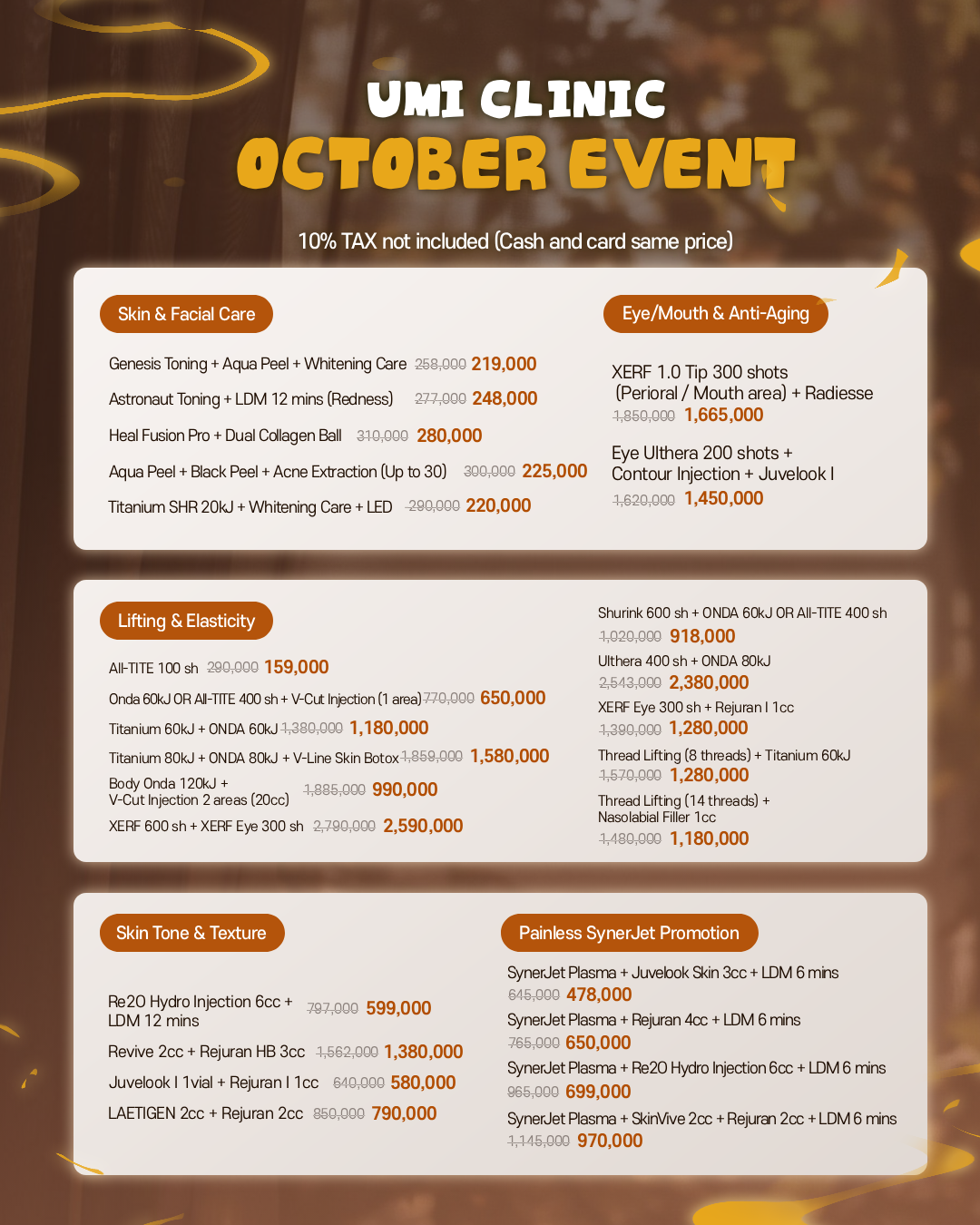
Find out whether puffiness is fluid, fat or a hollow casting shadows, then calm it with LDM, RF tightening or careful under-eye filler.
- Same price as locals
- English-speaking team
- Book on WhatsApp
- 中文 · 日本語
Quick answer
What causes puffy eyes and how are they treated?
Puffy eyes have three common causes: temporary fluid (from salt, alcohol, allergies, poor sleep or long flights), under-eye fat that pushes forward to form permanent eye bags, and a hollow tear trough below the bag that makes it look bigger.
Fluid puffiness improves with lifestyle changes and soothing treatments such as LDM; mild bags can be blended with carefully placed filler and RF tightening. Large fat bags are best assessed for lower-eyelid surgery.
Medically reviewed by Dr. Yoon Jong-woo , Medical Director, Umi Clinic (Korean-licensed physician) · Updated October 2026. Results vary by person; the doctor explains risks, side effects and alternatives at consultation.
- Session
- 20–45 min
- Numbing
- Cream
- Downtime
- None to 3 days
- Results
- Immediate to 2 months
- Lasts
- Varies by cause
- Pricing
- Same price as locals
Your visit
How Puffy eyes works at Umi
Every visit is doctor-led and explained in English, from the first skin check to aftercare.
- Find the cause
The doctor checks the fat pads, skin laxity, any hollow below and how puffiness changes through the day.
- Match the treatment
LDM for fluid and sensitivity, RF for laxity, filler to blend a hollow.
- Gentle treatment
Low-energy devices or a blunt cannula are used around the delicate eye area.
- Aftercare
Sleep slightly elevated, limit salt and alcohol, and use cold compresses if needed.
Before & after
How puffy eyes look smoother
Reducing fluid, tightening thin skin and blending the hollow under a bag create a smoother lid-to-cheek transition.
Fluid-related puffiness can look calmer after LDM.
Filler swelling settles and the hollow looks blended.
RF tightening firms thin under-eye skin.
Is it right for you?
Who Puffy eyes suits best
Good fit if you…
- Wake up with puffy eyes that settle during the day
- Have mild eye bags with a hollow underneath
- Want a fresher look without surgery
- Notice puffiness gets worse after flights or salty food
Consider another option if…
- You have large fat bags — lower blepharoplasty may suit better
- Swelling is sudden, one-sided or painful (see a doctor first)
- You have thyroid eye disease or kidney problems causing swelling
- You are pregnant or breastfeeding (for injectables)
Recovery & results
What to expect, step by step
- Same day
Mild redness after devices; possible swelling after filler.
- First week
Swelling settles; avoid rubbing your eyes.
- 1–2 months
Skin tightening and blending reach their best.
- Ongoing
Good sleep, less salt and allergy control keep puffiness down.
FAQ
Puffy eyes questions
Can filler remove eye bags?
Filler does not remove fat, but it can blend a mild bag into the cheek by filling the hollow below it. Too much filler can make puffiness worse, so it is used sparingly.
Why are my eyes puffier in the morning?
Fluid collects while you lie flat. It is often worse after salt, alcohol, crying or long flights, and improves once you are up and moving.
Do I need surgery?
If puffiness is mostly fat that bulges when you look up, surgery gives the most lasting result. The doctor will tell you honestly.
Can allergies cause puffy eyes?
Yes. Allergies and eye rubbing are common causes, and managing them often helps a lot.
Do foreigners pay more?
No. International patients pay the same price as local patients at Umi Clinic.
Related at Umi Clinic
Explore next
Treatments for puffy eyes
Related concerns
Plan your visit
Ask about Puffy eyes in English
Send a photo and your travel dates on WhatsApp — the team replies with a plan and a same-as-locals price.
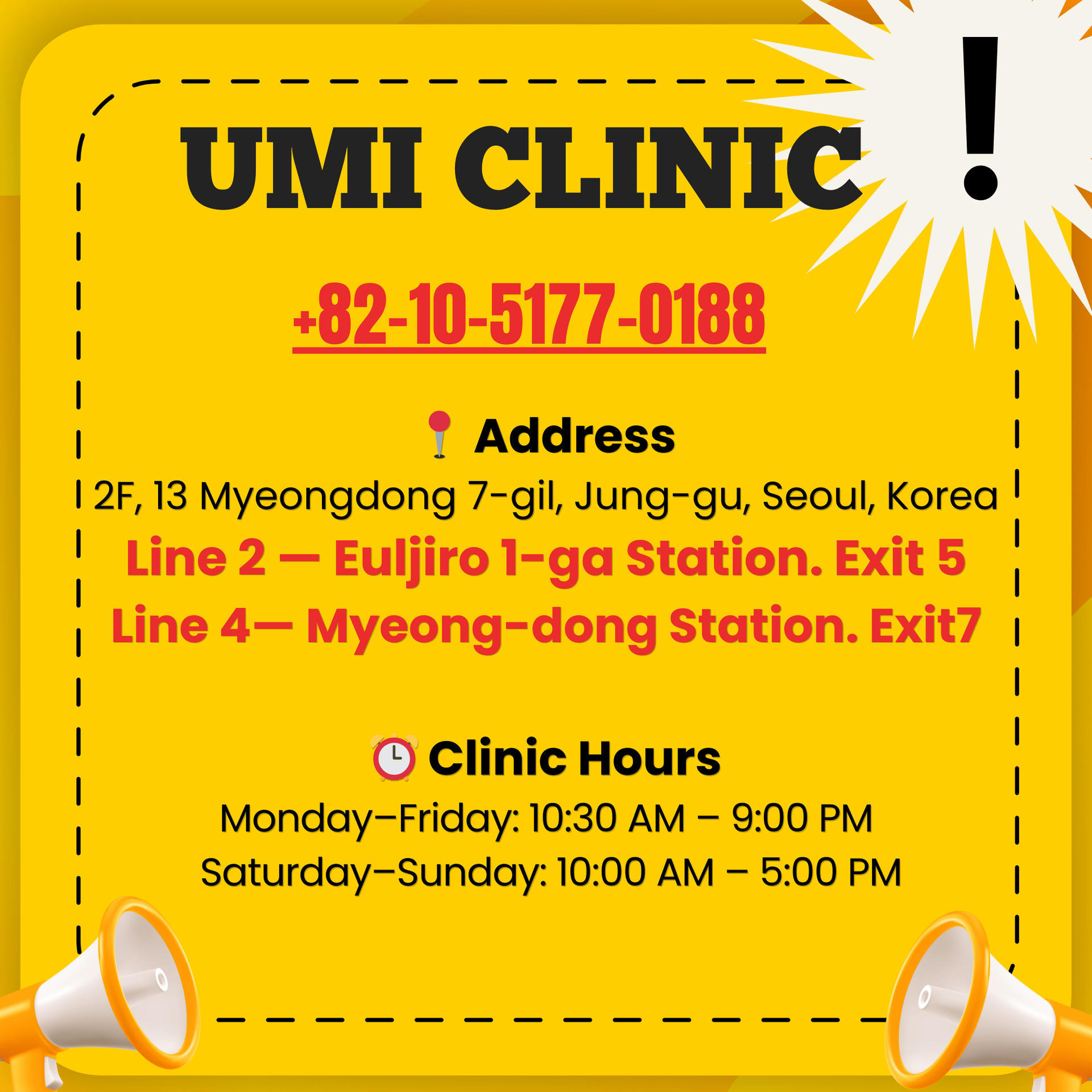
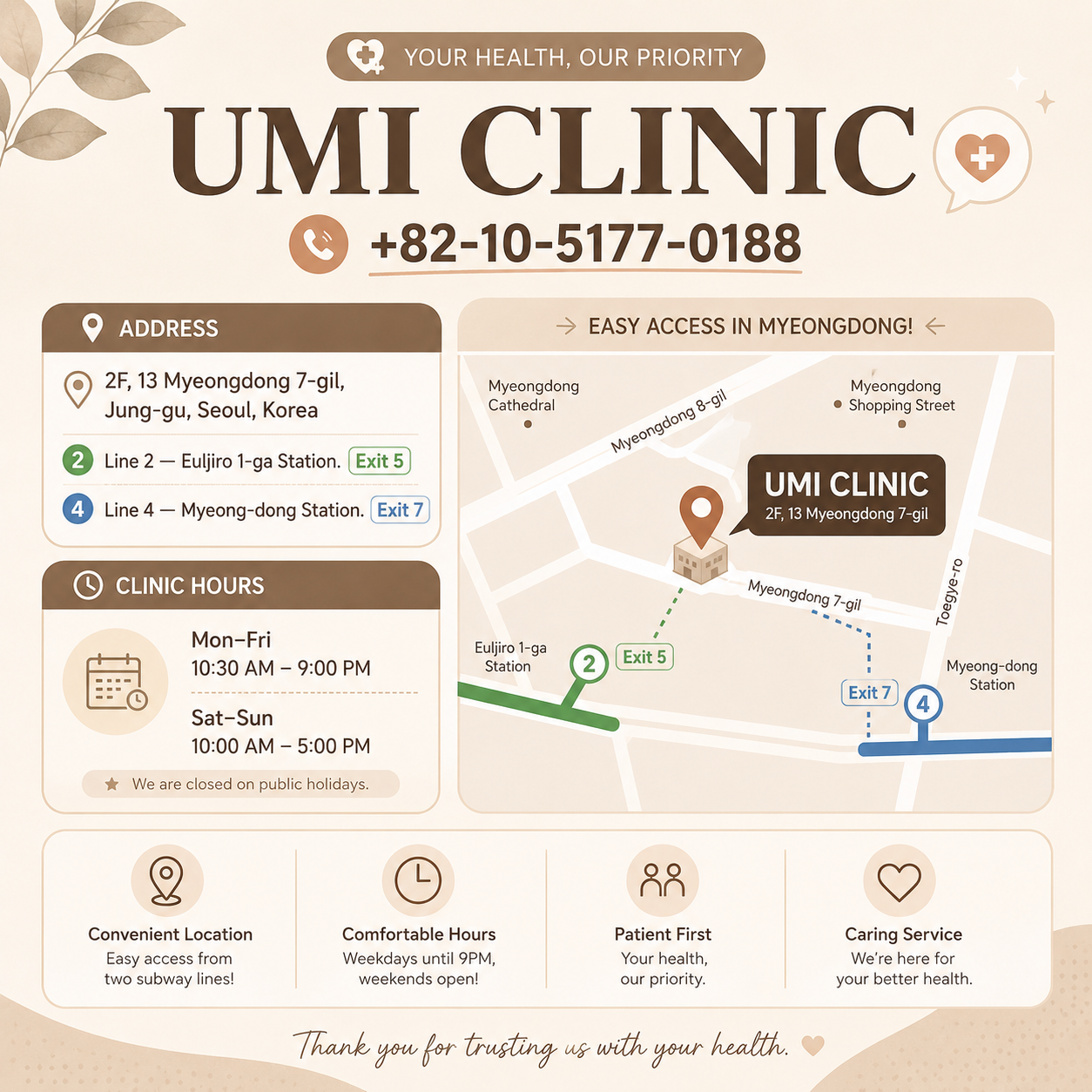
Umi Clinic (우미의원) · 13 Myeongdong 7-gil, Jung-gu, Seoul · Near Myeongdong Station Exit 6 · Directions & hours