Brown, red or grey discolouration · Myeongdong, Seoul
Skin discolouration in Myeongdong, Seoul
Find out what is causing patches of brown, grey or red skin — and treat it with the right laser, peel or medical cream.
- Same price as locals
- English-speaking team
- Book on WhatsApp
- 中文 · 日本語
Quick answer
What is skin discolouration?
Skin discolouration means areas that are darker, lighter or a different shade than the surrounding skin. Common causes include melasma, sun spots, marks left after acne or injury, redness from vessels, and less often vitiligo or birthmarks. The right treatment depends entirely on which one it is.
Our doctor in Myeongdong examines the pattern, depth and colour before choosing laser, peels or prescription creams. For brown marks, pigmentation treatment is usually the starting point.
Medically reviewed by Dr. Yoon Jong-woo , Medical Director, Umi Clinic (Korean-licensed physician) · Updated October 2026. Results vary by person; the doctor explains risks, side effects and alternatives at consultation.
- Session
- 20–45 min
- Numbing
- Cream if needed
- Downtime
- None to a few days
- Results
- Gradual over weeks to months
- Plan
- Depends on cause
- Pricing
- Same price as locals
Your visit
How Discolouration works at Umi
Every visit is doctor-led and explained in English, from the first skin check to aftercare.
- Examination
Skin analysis and a close look to identify the type and depth of colour.
- Treatment plan
Laser toning, pico, IPL, vascular laser, peels or creams, as appropriate.
- Treatment sessions
Settings are kept conservative to avoid new pigmentation.
- Aftercare
Sun protection, brightening skincare and follow-up advice for home.
Before & after
How discolouration is cleared
Each type of colour responds to a different target — pigment, vessels or surface cells — so treatment is matched to the cause.
Surface marks begin to fade or flake.
Pigment or redness lightens with repeated sessions.
Patches blend more with surrounding skin.
Is it right for you?
Who Discolouration suits best
Good fit if you…
- You have patches of skin that are a different colour
- You are not sure whether a mark is melasma, a sun spot or a scar
- Previous brightening products did not help
- You want a medical diagnosis before treating
Consider another option if…
- A spot is growing, bleeding or changing — it needs medical review first
- You have vitiligo, which needs a dermatology treatment plan
- You have a recent tan or sunburn
- You are pregnant (some treatments are deferred)
Recovery & results
What to expect, step by step
- Same day
Mild redness for an hour or two; slight darkening of spots is normal.
- First 2 weeks
Treated marks may crust lightly and flake off.
- 1–3 months
Colour becomes more even through the treatment plan.
- Maintenance
Daily SPF and occasional sessions to prevent recurrence.
FAQ
Discolouration questions
What does discolouration usually mean?
Most facial discolouration is from sun exposure, melasma or post-inflammatory marks. A doctor can tell them apart in a short consultation.
Can lighter patches be treated?
It depends. Lightening after inflammation often recovers with time; vitiligo needs a separate medical approach.
Will laser make discolouration worse?
It can if settings are too strong for melasma or darker skin. Conservative settings and good sun protection reduce that risk.
Do I need prescription creams?
Sometimes. Creams such as tranexamic acid or hydroquinone may be suggested for melasma alongside clinic treatment.
Do foreigners pay more?
No. International patients pay the same price as local patients at Umi Clinic.
Related at Umi Clinic
Explore next
Treatments that help
Related concerns
Plan your visit
Ask about Discolouration in English
Send a photo and your travel dates on WhatsApp — the team replies with a plan and a same-as-locals price.
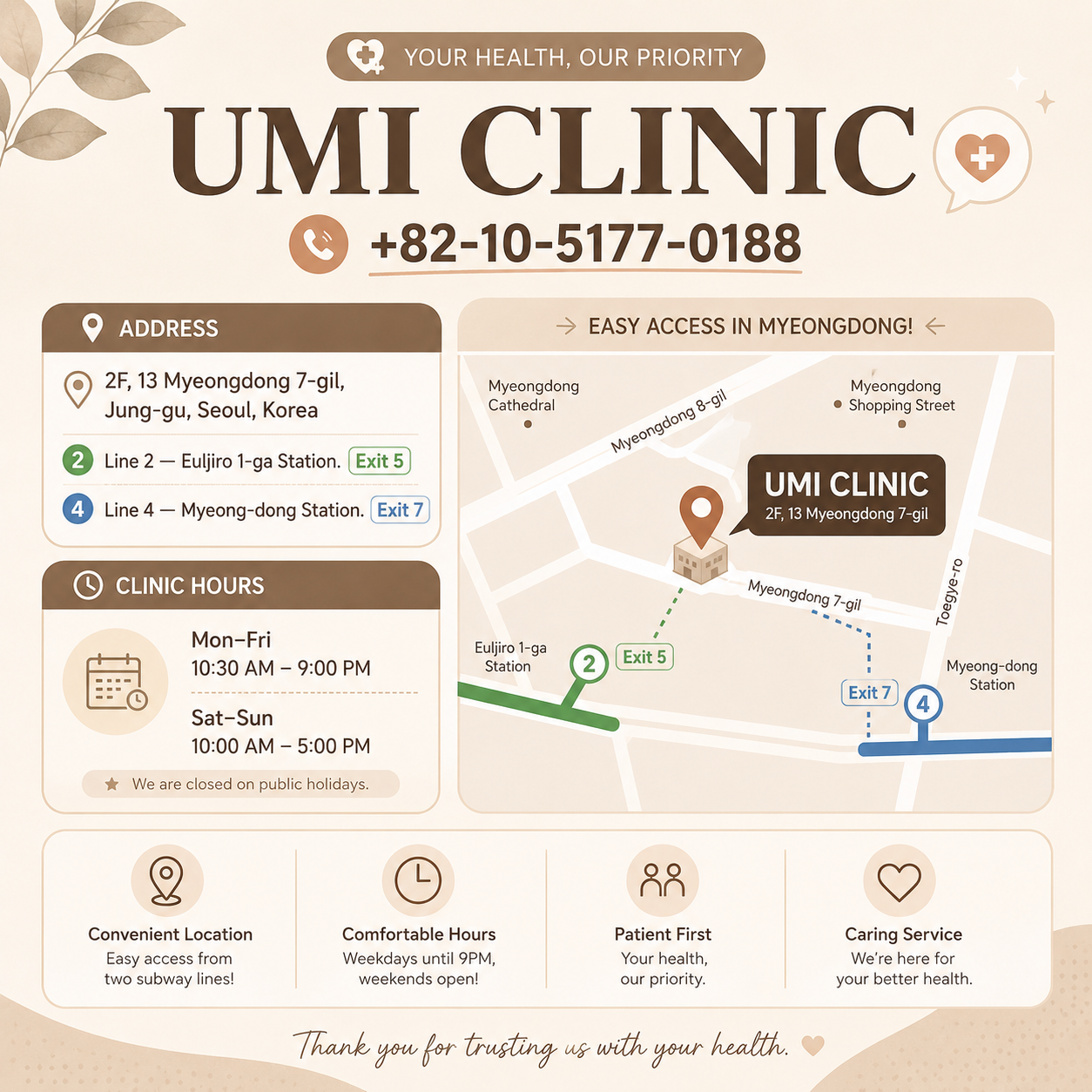
Umi Clinic (우미의원) · 13 Myeongdong 7-gil, Jung-gu, Seoul · Near Myeongdong Station Exit 6 · Directions & hours