Isotretinoin under medical supervision · Myeongdong, Seoul
Accutane (Isotretinoin) in Myeongdong, Seoul
The most effective medicine for severe or stubborn acne, prescribed only after a doctor’s assessment and monitored for safety throughout the course.
- Same price as locals
- English-speaking team
- Book on WhatsApp
- 中文 · 日本語
Quick answer
What is Accutane (isotretinoin)?
Accutane is a brand name for isotretinoin, an oral vitamin A–derived medicine that shrinks oil glands, reduces clogging and calms inflammation. It is used for severe, scarring or treatment-resistant acne and can lead to long-term remission for many people.
Because it has important side effects and causes serious birth defects, it is only prescribed after a medical consultation, often with blood tests, and with strict pregnancy prevention. Many Korean dermatologists use lower doses to reduce dryness. Breakouts may also need support from acne facials early on.
Medically reviewed by Dr. Yoon Jong-woo , Medical Director, Umi Clinic (Korean-licensed physician) · Updated October 2026. Results vary by person; the doctor explains risks, side effects and alternatives at consultation.
- Consult
- 20–30 min
- Form
- Daily oral capsule
- Course
- Usually 4–8 months
- Checks
- Blood tests as advised
- Common effects
- Dry lips & skin
- Pricing
- Same price as locals
Your visit
How Isotretinoin works at Umi
Every visit is doctor-led and explained in English, from the first skin check to aftercare.
- Medical consultation
The doctor reviews acne severity, history, medicines and health conditions.
- Safety checks
Blood tests and pregnancy testing where relevant before starting.
- Prescription & dosing
A dose is chosen for your weight, skin and tolerance.
- Monitoring
Regular follow-ups to adjust dose and manage dryness.
Before & after
How isotretinoin clears severe acne
Oil glands shrink and pores clog less, so new breakouts stop forming and inflamed skin settles over months.
Skin and lips become drier; an early flare can occur.
Breakouts noticeably reduce.
Most people reach clear or nearly clear skin.
Is it right for you?
Who Isotretinoin suits best
Good fit if you…
- Have severe, nodular or scarring acne
- Have acne that returned after antibiotics or topicals
- Can attend follow-up visits or continue with a home doctor
- Can follow strict pregnancy prevention if applicable
Consider another option if…
- You are pregnant, breastfeeding or planning pregnancy
- You have significant liver disease or very high blood lipids
- You have a history of severe depression — discuss carefully first
- You take tetracycline antibiotics or vitamin A supplements
Recovery & results
What to expect, step by step
- First weeks
Dry lips and skin; use lip balm and moisturiser daily.
- Month 1–2
Possible initial flare, then fewer new spots.
- Months 3–8
Skin clears; dose is reviewed at check-ups.
- After the course
Wait about 6 months before laser resurfacing for scars, per doctor advice.
FAQ
Isotretinoin questions
Can a tourist start Accutane in Seoul?
It is possible only if the doctor can assess you safely and you can be monitored. Often the best plan is to start in Seoul and continue with a doctor at home.
What are the common side effects?
Dry lips, skin and eyes, nosebleeds and sun sensitivity are common. Mood changes and other effects are less common and should be reported promptly.
Can I drink alcohol on isotretinoin?
It is best to limit alcohol, as both can affect the liver and blood lipids.
Can I have laser or waxing while on it?
Aggressive resurfacing and waxing are usually avoided during treatment because skin heals more slowly. Gentle care is fine.
Do foreigners pay more?
No. International patients pay the same price as local patients at Umi Clinic.
Related at Umi Clinic
Explore next
Related acne care
Acne types it treats
Plan your visit
Ask about Isotretinoin in English
Send a photo and your travel dates on WhatsApp — the team replies with a plan and a same-as-locals price.
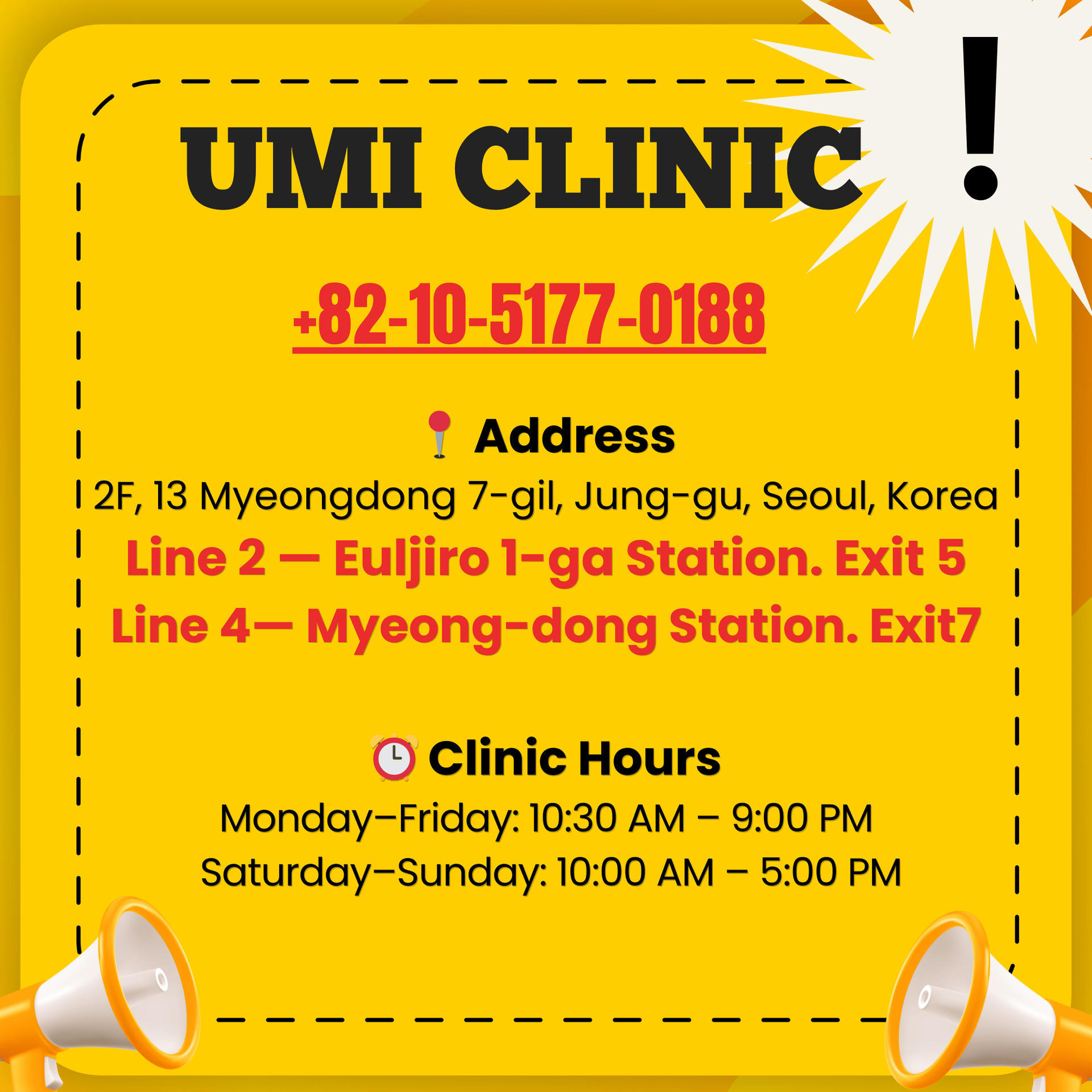
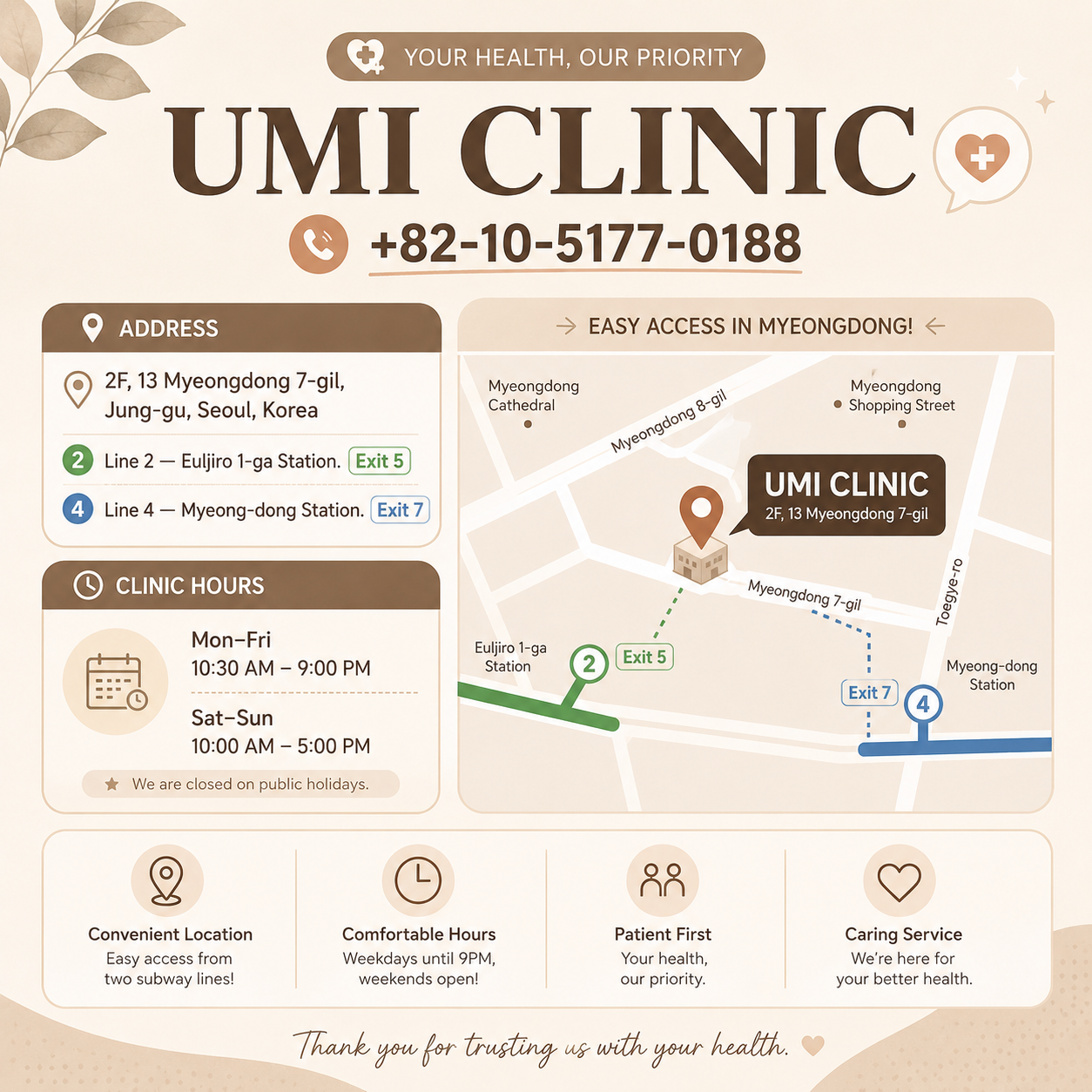
Umi Clinic (우미의원) · 13 Myeongdong 7-gil, Jung-gu, Seoul · Near Myeongdong Station Exit 6 · Directions & hours