Picosecond laser for post-acne marks · Myeongdong, Seoul
Pico Laser for Acne Marks in Myeongdong, Seoul
Ultra-short picosecond pulses break up brown marks left by old breakouts and refine texture, with little downtime between sightseeing days.
- Same price as locals
- English-speaking team
- Book on WhatsApp
- 中文 · 日本語
Quick answer
What does pico laser do for acne marks?
A pico laser delivers energy in trillionths of a second, shattering excess pigment in brown post-acne marks into tiny particles the body clears naturally. Because the pulse is so short, less heat reaches surrounding skin than with older lasers.
Fractional pico settings can also stimulate collagen to soften shallow texture. It works best on brown (post-inflammatory hyperpigmentation) marks; red marks usually respond better to vascular light such as IPL for acne redness.
Medically reviewed by Dr. Yoon Jong-woo , Medical Director, Umi Clinic (Korean-licensed physician) · Updated October 2026. Results vary by person; the doctor explains risks, side effects and alternatives at consultation.
- Session
- 15–30 min
- Numbing
- Topical cream
- Downtime
- Mild redness 1–2 days
- Results
- Gradual over several sessions
- Interval
- Every 2–4 weeks
- Pricing
- Same price as locals
Your visit
How Pico laser works at Umi
Every visit is doctor-led and explained in English, from the first skin check to aftercare.
- Mark assessment
The doctor checks whether marks are brown, red or textural and sets the plan.
- Numbing & cleansing
Make-up is removed and numbing cream applied if needed.
- Pico laser passes
Toning or fractional pulses are delivered over the marks.
- Aftercare
Soothing cream, gentle cleanser and daily SPF 50.
Before & after
How pico laser fades acne marks
Shattered pigment is cleared by the skin over the following weeks, so marks lighten progressively with each session.
Marks may look slightly darker before flaking off.
Pigment is cleared; tone looks more even.
Most brown marks are clearly lighter.
Is it right for you?
Who Pico laser suits best
Good fit if you…
- Have flat brown marks after acne healed
- Want minimal downtime while travelling
- Also want mild texture refinement
- Can use sunscreen consistently
Consider another option if…
- Acne is still widely active — control it first
- Marks are mainly red — consider IPL or Excel V
- You are pregnant or using photosensitising medicines
- You have deep pitted scars — consider scar treatments
Recovery & results
What to expect, step by step
- Same day
Light redness and warmth; gentle make-up often next day.
- First week
Some marks darken slightly, then flake away.
- 2–4 weeks
Next session; tone becomes more uniform.
- After the series
Maintenance only if new marks appear.
FAQ
Pico laser questions
Is pico laser safe for darker skin tones?
Yes, when settings are conservative. Picosecond lasers carry a lower heat load, which helps reduce the risk of rebound pigmentation in darker skin.
How many sessions do I need?
Usually 3–6 sessions 2–4 weeks apart, depending on how deep and old the marks are.
Does it help acne scars too?
Fractional pico can soften shallow texture, but deeper pitted scars usually need subcision, fractional laser or microneedling.
Can I have it during a short trip?
Yes. Downtime is minimal, so one session fits easily into a Seoul trip.
Do foreigners pay more?
No. International patients pay the same price as local patients at Umi Clinic.
Related at Umi Clinic
Explore next
Related treatments
Concerns it helps
Plan your visit
Ask about Pico laser in English
Send a photo and your travel dates on WhatsApp — the team replies with a plan and a same-as-locals price.
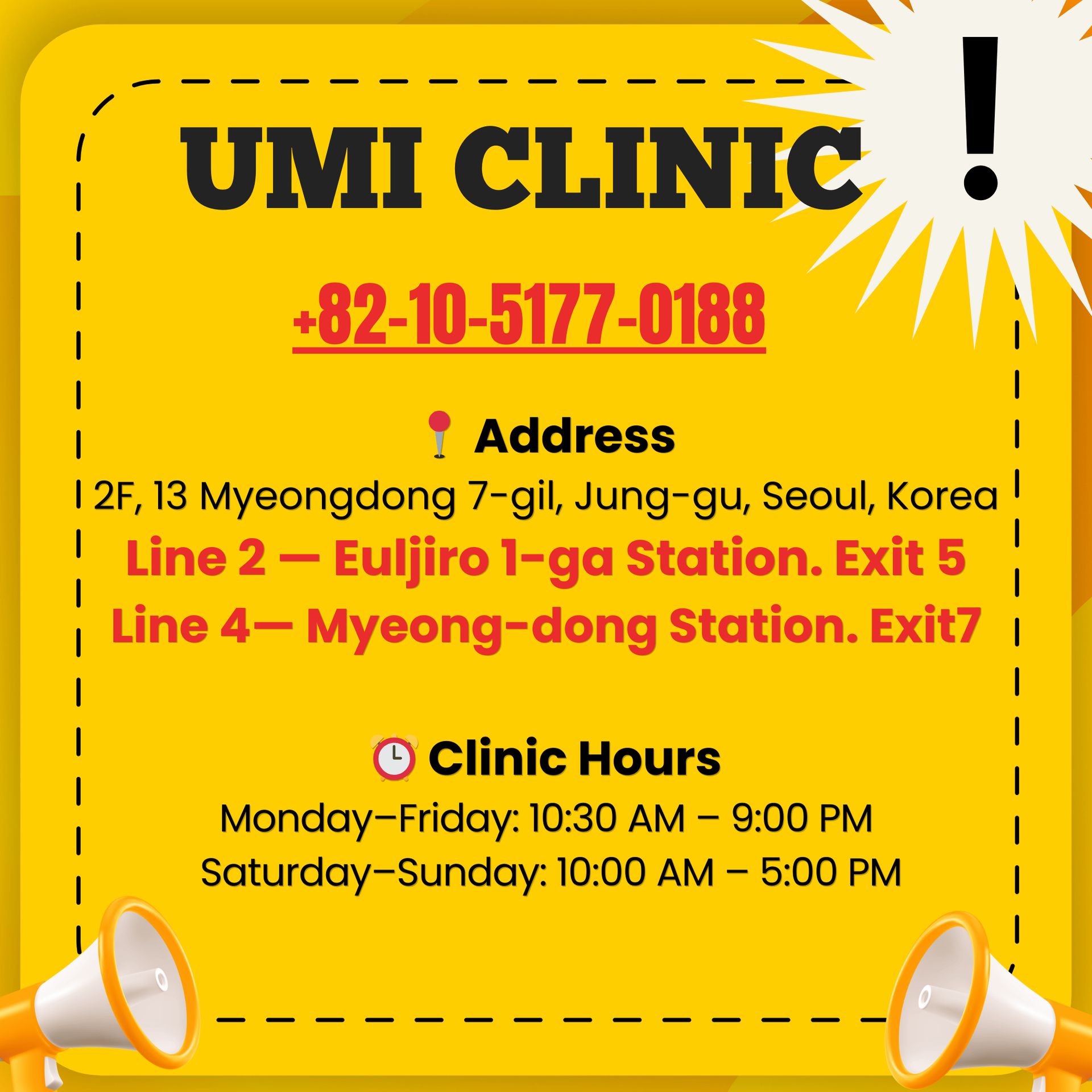
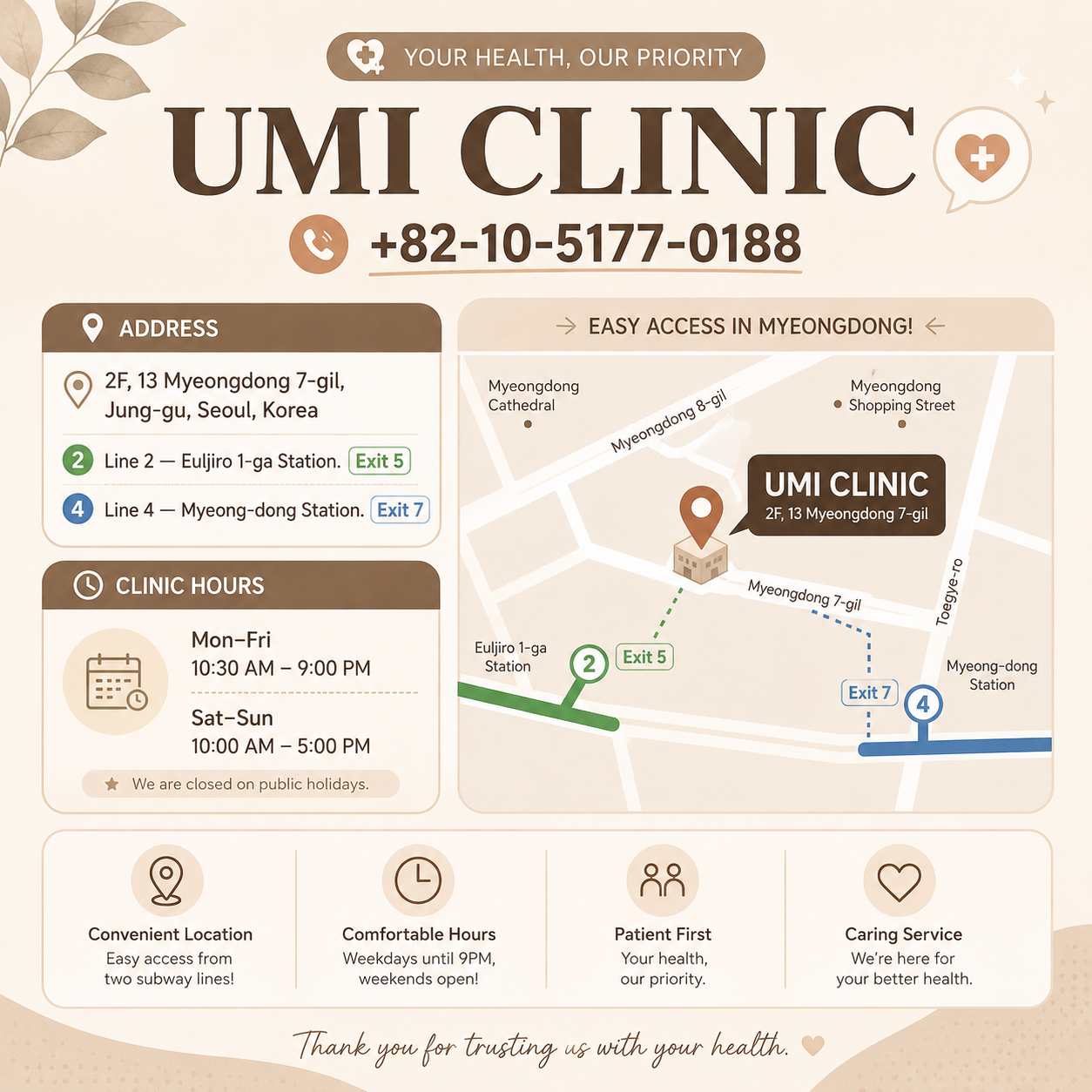
Umi Clinic (우미의원) · 13 Myeongdong 7-gil, Jung-gu, Seoul · Near Myeongdong Station Exit 6 · Directions & hours