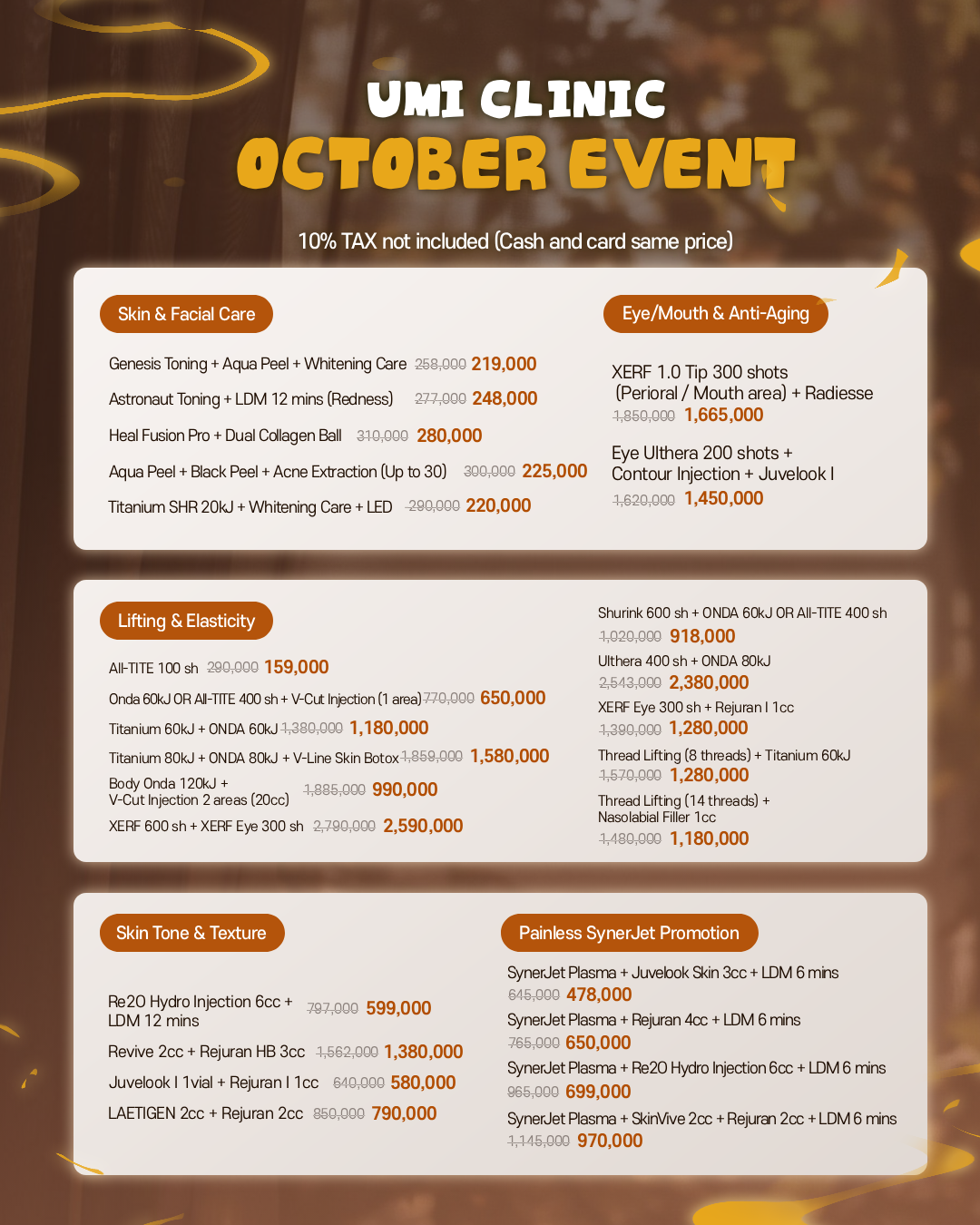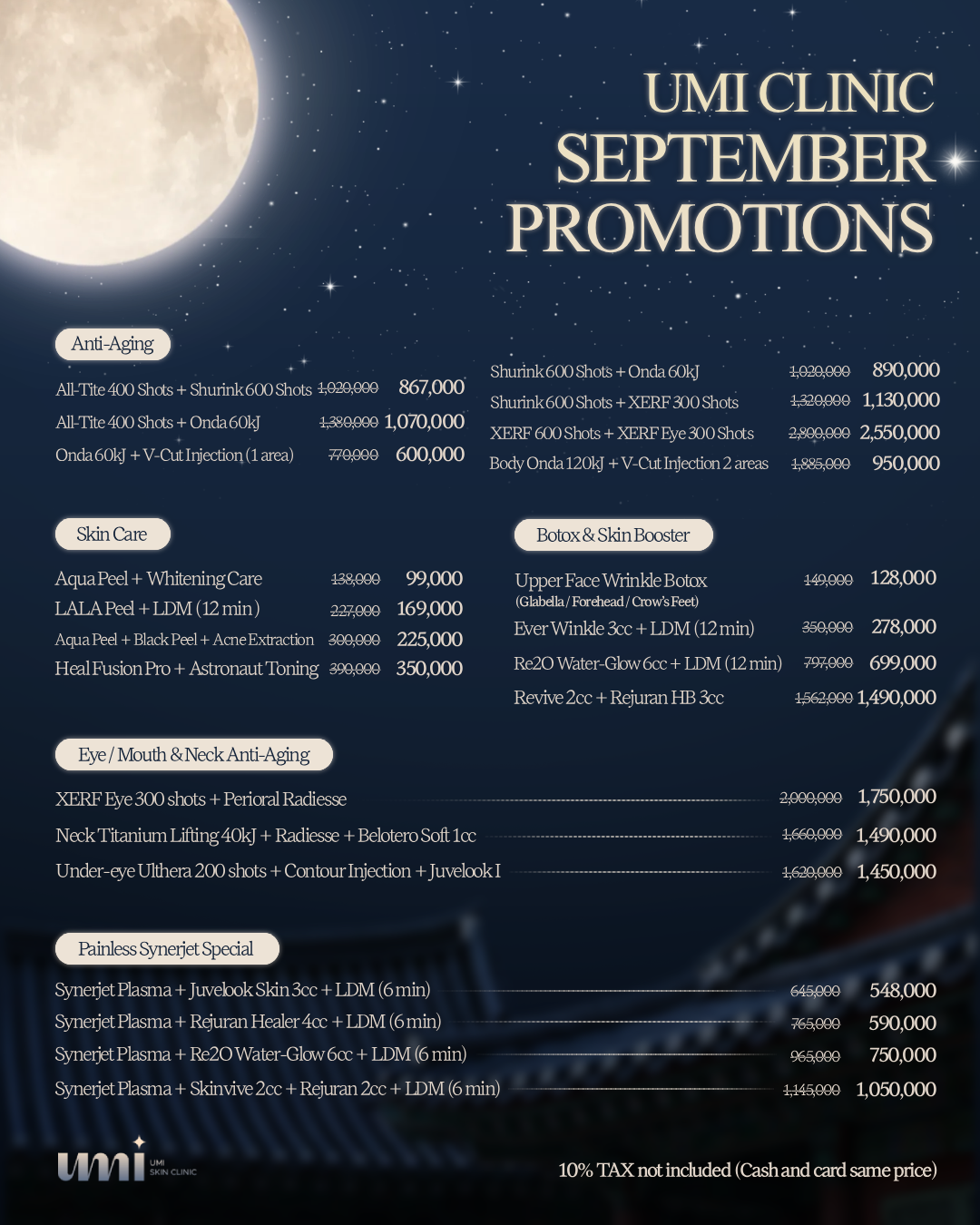
Intense pulsed light for red acne marks · Myeongdong, Seoul
IPL for Acne Redness in Myeongdong, Seoul
Broad-spectrum light targets the dilated vessels behind red and pink post-acne marks and calms inflamed spots, with little or no downtime.
- Same price as locals
- English-speaking team
- Book on WhatsApp
- 中文 · 日本語
Quick answer
What does IPL do for acne redness?
IPL (intense pulsed light) sends filtered flashes of light that are absorbed by haemoglobin in small, dilated blood vessels. The heat closes these vessels, so the red or pink marks left after breakouts — post-inflammatory erythema — fade over time.
IPL also has a mild calming effect on active inflamed acne. It works best on lighter to medium skin tones and on marks that are red rather than brown; brown marks usually respond better to pico laser or laser toning.
Medically reviewed by Dr. Yoon Jong-woo , Medical Director, Umi Clinic (Korean-licensed physician) · Updated October 2026. Results vary by person; the doctor explains risks, side effects and alternatives at consultation.
- Session
- 15–30 min
- Numbing
- Not usually needed
- Downtime
- Mild flushing for hours
- Results
- Gradual over 3–5 sessions
- Interval
- Every 3–4 weeks
- Pricing
- Same price as locals
Your visit
How IPL works at Umi
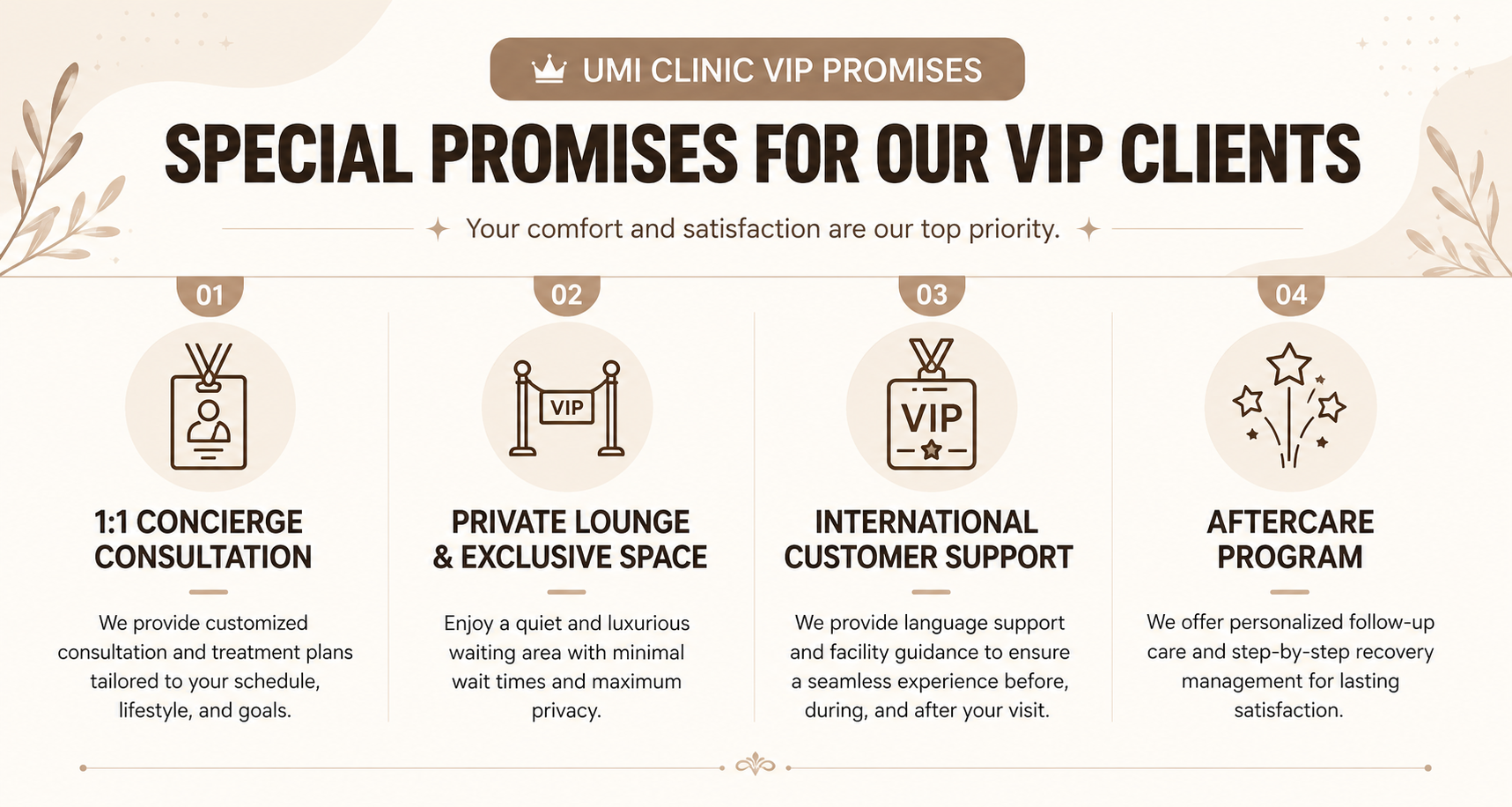
Every visit is doctor-led and explained in English, from the first skin check to aftercare.
- Redness check
The doctor confirms the marks are vascular (red) and checks your skin tone.
- Protect & prepare
Eye shields are placed and a cooling gel applied.
- Light pulses
Filtered flashes are delivered over red marks and inflamed areas.
- Aftercare
Cooling, gentle moisturiser and high-SPF sunscreen.
Before & after
How IPL fades red acne marks
Light energy gently closes the tiny vessels that keep post-acne marks red, so they blend into the surrounding skin.
Mild flushing; marks may look briefly darker.
Redness of treated marks begins to fade.
Red marks are clearly less visible.
Is it right for you?
Who IPL suits best
Good fit if you…
- Have red or pink marks after acne
- Have mild inflammatory acne with redness
- Have light to medium skin tone
- Want a quick treatment with little downtime
Consider another option if…
- Your marks are mainly brown — pico laser may suit better
- You have a recent tan or are going to the beach right after
- You are pregnant or using photosensitising medicines
- You have very dark skin — another option may be safer
Recovery & results
What to expect, step by step
- Same day
Light flushing and warmth for a few hours.
- First week
Some marks look slightly darker before fading.
- 3–4 weeks
Next session; overall redness is lower.
- After the course
Maintenance only if new red marks form.
FAQ
IPL questions
Is IPL the same as laser?
No. IPL uses a range of light wavelengths filtered for the target, while a laser uses one precise wavelength. Both can treat redness.
Will IPL remove acne scars?
IPL treats colour (redness), not depressed scars. Scars need resurfacing such as fractional laser or subcision.
Can I go in the sun after IPL?
Avoid strong sun and tanning for at least two weeks and always wear SPF 50, as tanned skin raises the risk of side effects.
How many sessions will I need?
Usually 3–5, spaced 3–4 weeks apart.
Do foreigners pay more?
No. International patients pay the same price as local patients at Umi Clinic.
Related at Umi Clinic
Explore next
Related light treatments
Concerns it helps
Plan your visit
Ask about IPL in English
Send a photo and your travel dates on WhatsApp — the team replies with a plan and a same-as-locals price.
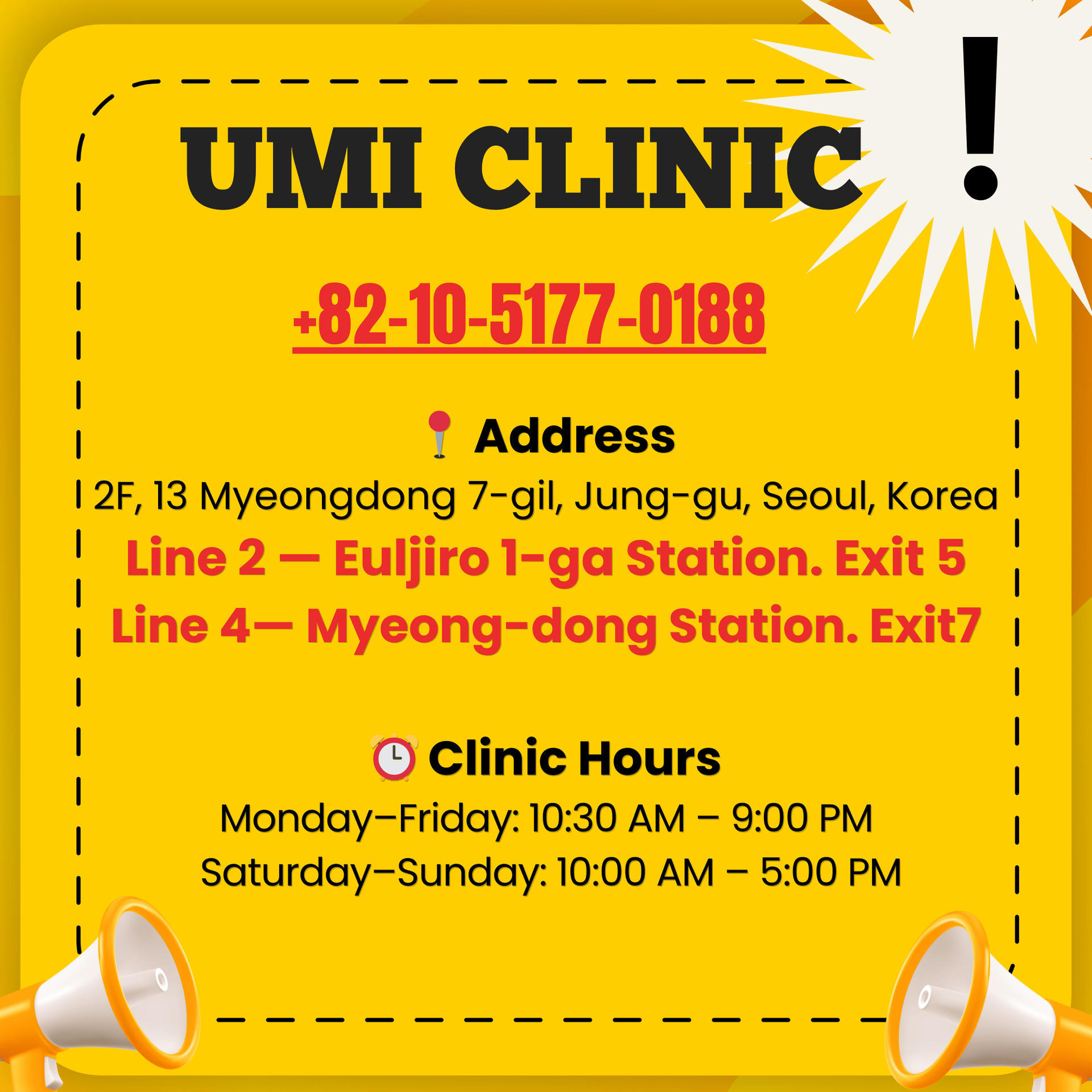
Umi Clinic (우미의원) · 13 Myeongdong 7-gil, Jung-gu, Seoul · Near Myeongdong Station Exit 6 · Directions & hours