Raised scar treatment · Myeongdong, Seoul
Keloid Scar Treatment in Myeongdong, Seoul
Steroid injections, laser and pressure care to flatten raised keloid and hypertrophic scars and ease itching, step by step.
- Same price as locals
- English-speaking team
- Book on WhatsApp
- 中文 · 日本語
Quick answer
How are keloid scars treated?
A keloid is a raised scar that grows beyond the original wound because the skin overproduces collagen. Treatment usually starts with corticosteroid injections into the scar to soften and flatten it, often combined with vascular or fractional laser to reduce redness and improve texture, plus silicone gel or pressure at home.
Keloids tend to recur, so the aim is control rather than a one-off cure, and earlobe, chest and shoulder keloids each need a slightly different plan. Flat, red acne marks are a different problem — see acne scar treatment for those.
Medically reviewed by Dr. Yoon Jong-woo , Medical Director, Umi Clinic (Korean-licensed physician) · Updated October 2026. Results vary by person; the doctor explains risks, side effects and alternatives at consultation.
- Session
- 15–30 min
- Numbing
- Usually none; ice
- Downtime
- None to minimal
- Results
- Flattening over 2–3 sessions
- Sessions
- Often 3–6, about 4 weeks apart
- Pricing
- Same price as locals
Your visit
How Keloid Scar works at Umi
Every visit is doctor-led and explained in English, from the first skin check to aftercare.
- Scar assessment
The doctor confirms keloid versus hypertrophic scar and asks about itching, pain and history.
- Injection
A steroid solution is injected directly into the scar with a fine needle.
- Laser if suited
Vascular or fractional laser treats redness and texture in the same visit.
- Home care
Silicone gel or sheets daily; report any thinning or lightening of the skin.
Before & after
How keloid treatment flattens the scar
Injections calm excess collagen production and laser reduces the blood supply, so the scar softens, flattens and fades.
Itching and tenderness often ease first.
The scar becomes softer and flatter.
Colour fades and the scar blends better.
Is it right for you?
Who Keloid Scar suits best
Good fit if you…
- Have a raised, itchy or painful scar
- Have earlobe keloids after piercing
- Have chest or shoulder keloids after acne or injury
- Are willing to follow a series and home care
Consider another option if…
- You are pregnant or breastfeeding (steroid injections are usually postponed)
- The lump is changing quickly or bleeding — it needs diagnosis first
- You can only come once and expect complete removal
- You have an active infection in the area
Recovery & results
What to expect, step by step
- Same day
Mild soreness at the injection site.
- 2–4 weeks
The scar starts to soften; next session is planned.
- 3–6 months
Flatter, paler scar after a series.
- Long term
Silicone and early re-treatment help prevent regrowth.
FAQ
Keloid Scar questions
Can keloids be removed completely?
They can often be flattened greatly, but keloids tend to come back, especially after surgery alone. Combined and maintained treatment gives the best control.
Are steroid injections safe?
Yes when dosed correctly. Possible side effects include skin thinning or lightening, which the doctor monitors.
Can I treat a keloid during a short trip?
You can start treatment in Seoul and continue injections or silicone care at home; the doctor gives a written plan.
Do lasers help keloids?
Laser alone is not enough, but combined with injections it can reduce redness and improve texture.
Do foreigners pay more?
No. International patients pay the same price as local patients at Umi Clinic.
Related at Umi Clinic
Explore next
Related treatments
Concerns it helps
Plan your visit
Ask about Keloid Scar in English
Send a photo and your travel dates on WhatsApp — the team replies with a plan and a same-as-locals price.
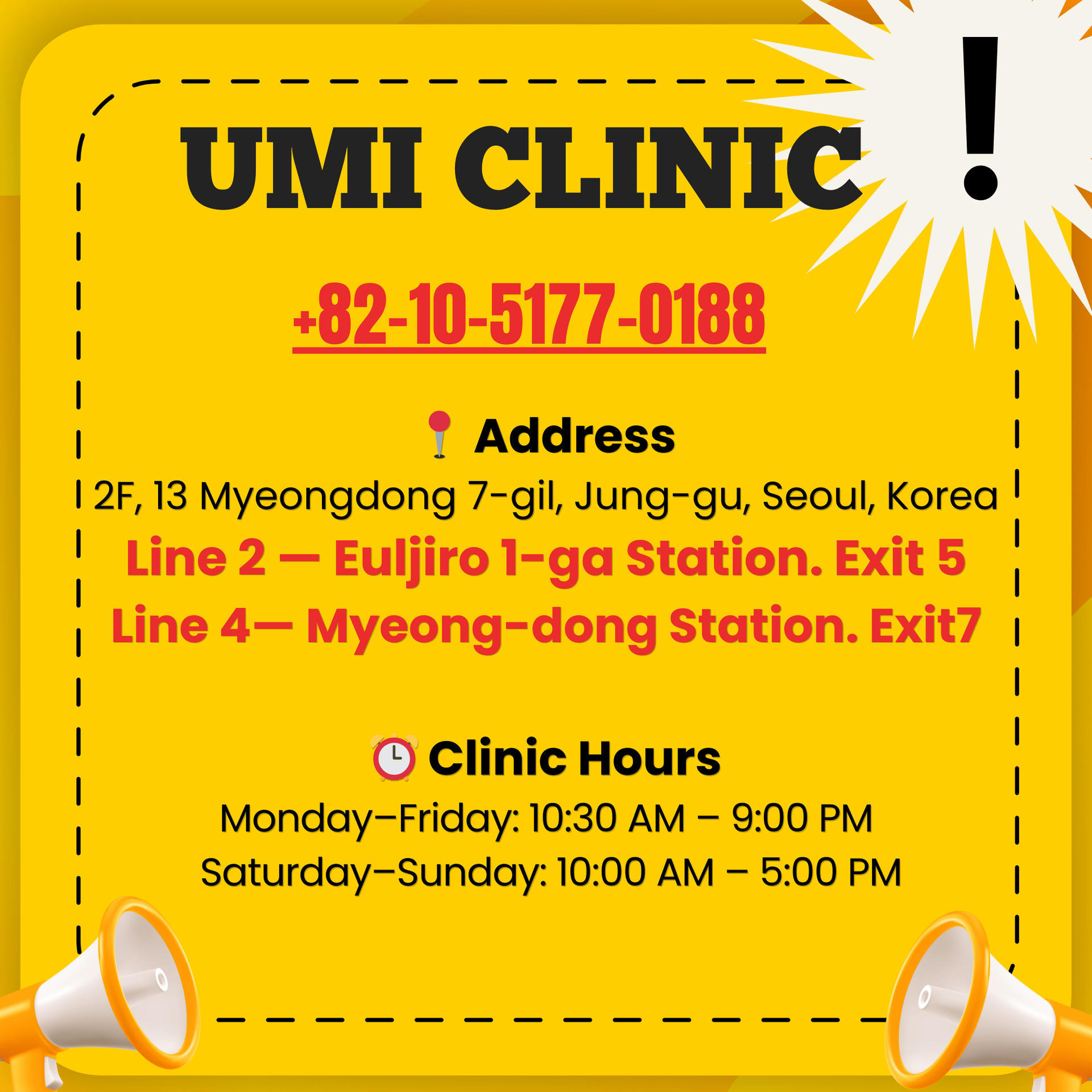
Umi Clinic (우미의원) · 13 Myeongdong 7-gil, Jung-gu, Seoul · Near Myeongdong Station Exit 6 · Directions & hours