Laser mole & wart removal · Myeongdong, Seoul
Mole & Wart Removal in Myeongdong, Seoul
Doctor-checked removal of small benign moles, warts and seborrheic spots with CO2 laser, usually in one quick visit.
- Same price as locals
- English-speaking team
- Book on WhatsApp
- 中文 · 日本語
Quick answer
How are moles and warts removed?
Small, benign-looking moles and seborrheic keratoses are usually removed with a CO2 laser, which vaporises the lesion layer by layer with precise control. Viral warts are treated with laser or cryotherapy, sometimes over several sessions because the virus can persist.
Every lesion is checked by a doctor first; anything with irregular shape, colour or recent change is referred for biopsy rather than lasered. Raised skin tags have their own simple method — see skin tag removal.
Medically reviewed by Dr. Yoon Jong-woo , Medical Director, Umi Clinic (Korean-licensed physician) · Updated October 2026. Results vary by person; the doctor explains risks, side effects and alternatives at consultation.
- Session
- 10–30 min
- Numbing
- Numbing cream or local injection
- Downtime
- Small scabs 7–10 days
- Results
- Lesion gone after healing
- Sessions
- Often 1; warts may need 2–4
- Pricing
- Same price as locals
Your visit
How Mole removal works at Umi
Every visit is doctor-led and explained in English, from the first skin check to aftercare.
- Doctor examination
Each mole or wart is examined, often with dermoscopy, to check it looks benign.
- Numbing
Numbing cream or a tiny local anaesthetic injection.
- Laser removal
The CO2 laser removes the lesion precisely; warts may also be frozen.
- Wound care
Apply the provided ointment and a hydrocolloid patch; sunscreen for months to avoid marks.
Before & after
How laser removal clears the spot
The laser removes the lesion layer by layer, then new skin heals over a small, shallow wound.
A small scab or patch covers the spot.
Scab falls off; skin is pink.
Pinkness fades with sun protection.
Is it right for you?
Who Mole removal suits best
Good fit if you…
- Have small benign moles you want removed for cosmetic reasons
- Have common, flat or plantar warts
- Have seborrheic keratoses or raised brown spots
- Can keep the area covered and protected from sun
Consider another option if…
- A mole is changing, bleeding or irregular — it needs a biopsy
- You have a tendency to keloid scars (discuss first)
- You have an active infection around the lesion
- You are pregnant and the removal can wait
Recovery & results
What to expect, step by step
- Same day
Small shallow wounds covered with patches.
- First week
Keep patches on; avoid swimming and saunas.
- 1–2 weeks
Scabs fall off, leaving pink new skin.
- 1–3 months
Pinkness fades; deep moles may need a touch-up.
FAQ
Mole removal questions
Will it leave a scar?
Small, shallow removals usually heal with little or no visible mark, though deeper moles can leave a small dent or light spot.
Can a mole come back?
Some deeper moles can partly regrow, and a second session may be needed.
Do you check if a mole is cancerous?
The doctor examines every lesion first. Suspicious moles are not lasered but referred for biopsy.
Can I remove moles on holiday?
Yes, but plan for 7–10 days of patch care and avoid sun and swimming on the area.
Do foreigners pay more?
No. International patients pay the same price as local patients at Umi Clinic.
Related at Umi Clinic
Explore next
Related treatments
Concerns it helps
Plan your visit
Ask about Mole removal in English
Send a photo and your travel dates on WhatsApp — the team replies with a plan and a same-as-locals price.
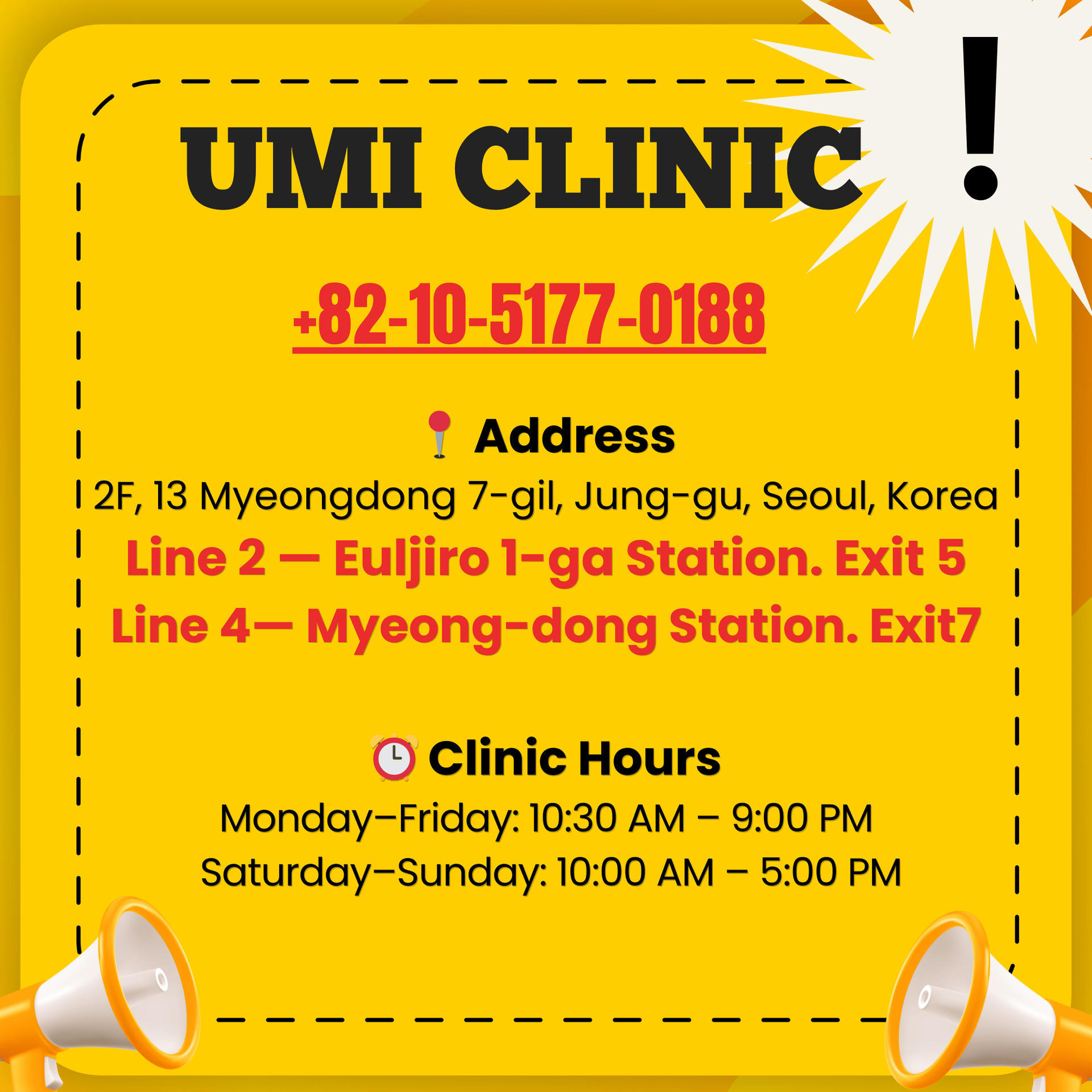
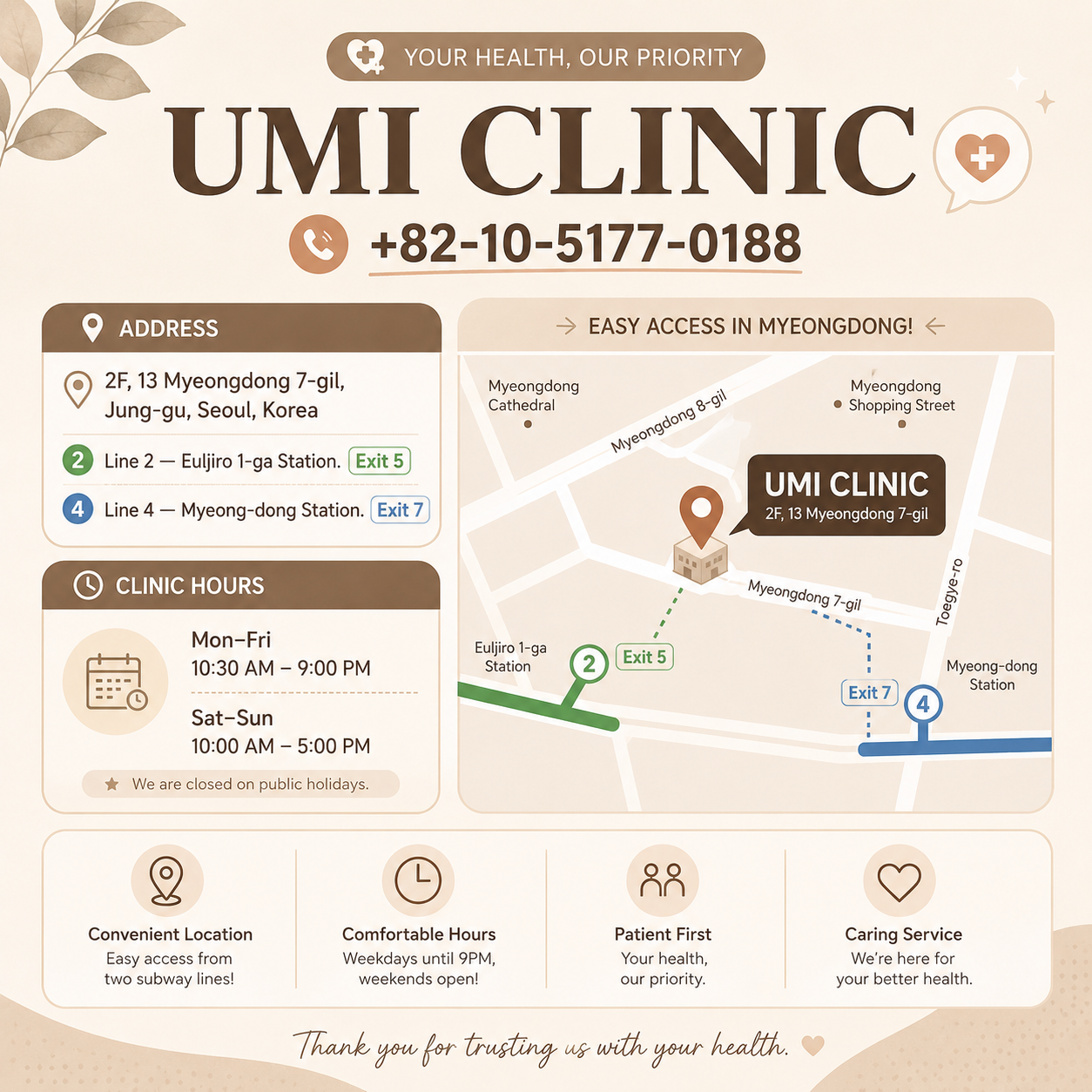
Umi Clinic (우미의원) · 13 Myeongdong 7-gil, Jung-gu, Seoul · Near Myeongdong Station Exit 6 · Directions & hours