Melasma care · Myeongdong, Seoul
Melasma Treatment in Myeongdong, Seoul
Patchy brown pigment on the cheeks, forehead and upper lip, managed with gentle laser toning, tranexamic acid and careful sun protection.
- Same price as locals
- English-speaking team
- Book on WhatsApp
- 中文 · 日本語
Quick answer
What is melasma and how is it treated?
Melasma is a chronic pigment condition that causes symmetrical brown or grey-brown patches, usually on the cheeks, forehead, nose and upper lip. It is driven by sunlight and visible light, hormones (pregnancy, the pill) and genetics, and is more common in women with medium skin tones.
Because strong heat can make melasma worse, Korean clinics favour a series of low-energy laser toning sessions combined with tranexamic acid, brightening skincare and strict sun protection. Melasma can be controlled and lightened, but it tends to return, so maintenance matters. See also laser toning.
Medically reviewed by Dr. Yoon Jong-woo , Medical Director, Umi Clinic (Korean-licensed physician) · Updated October 2026. Results vary by person; the doctor explains risks, side effects and alternatives at consultation.
- Session
- 20–30 min
- Numbing
- Usually not needed
- Downtime
- None to mild redness
- Results
- Gradual over 2–3 months
- Course
- 5–10 sessions, 1–2 weeks apart
- Pricing
- Same price as locals
Your visit
How Melasma works at Umi
Every visit is doctor-led and explained in English, from the first skin check to aftercare.
- Pigment assessment
The doctor confirms melasma and checks for other pigment types mixed in.
- Gentle plan
Low-energy laser toning and supportive care are chosen to avoid rebound.
- Laser toning
Even, low-fluence passes break up pigment without heating the skin.
- Home care
Broad-spectrum sunscreen, tinted mineral SPF and brightening skincare.
Before & after
How melasma gradually lightens
Gentle, repeated sessions reduce excess melanin while calming the overactive pigment cells, so patches fade without rebound.
Skin looks brighter; patches begin to soften.
Patches are visibly lighter and less defined.
Occasional sessions and SPF keep pigment in check.
Is it right for you?
Who Melasma suits best
Good fit if you…
- Have symmetrical brown patches on cheeks or forehead
- Noticed pigment after pregnancy or hormonal changes
- Can commit to a series of short sessions
- Will use daily sunscreen year-round
Consider another option if…
- You are pregnant or breastfeeding — some treatments must wait
- You expect a single, permanent cure
- You plan intense sun exposure right after treatment
- You have pigment the doctor suspects is not melasma — other care may suit
Recovery & results
What to expect, step by step
- Same day
Mild pinkness at most; make-up straight away.
- First weeks
Skin looks brighter and more even.
- 2–3 months
Patches clearly lighter after a series.
- Long term
Sun protection and maintenance to prevent return.
FAQ
Melasma questions
Can melasma be cured?
Melasma can be greatly improved and controlled, but it is a chronic condition that can return with sun or hormonal changes, so maintenance is important.
Why not use a strong laser?
High heat can trigger more pigment in melasma. Low-energy toning is gentler and lowers the risk of rebound darkening.
What is tranexamic acid?
A medicine that helps reduce pigment production in melasma. It may be used as a cream, injection or tablet when suitable, after checking your health history.
How many sessions do I need?
Often 5–10 sessions about 1–2 weeks apart, followed by occasional maintenance.
Do foreigners pay more?
No. International patients pay the same price as local patients at Umi Clinic.
Related at Umi Clinic
Explore next
Treatments for melasma
Related pigment concerns
Plan your visit
Ask about Melasma in English
Send a photo and your travel dates on WhatsApp — the team replies with a plan and a same-as-locals price.
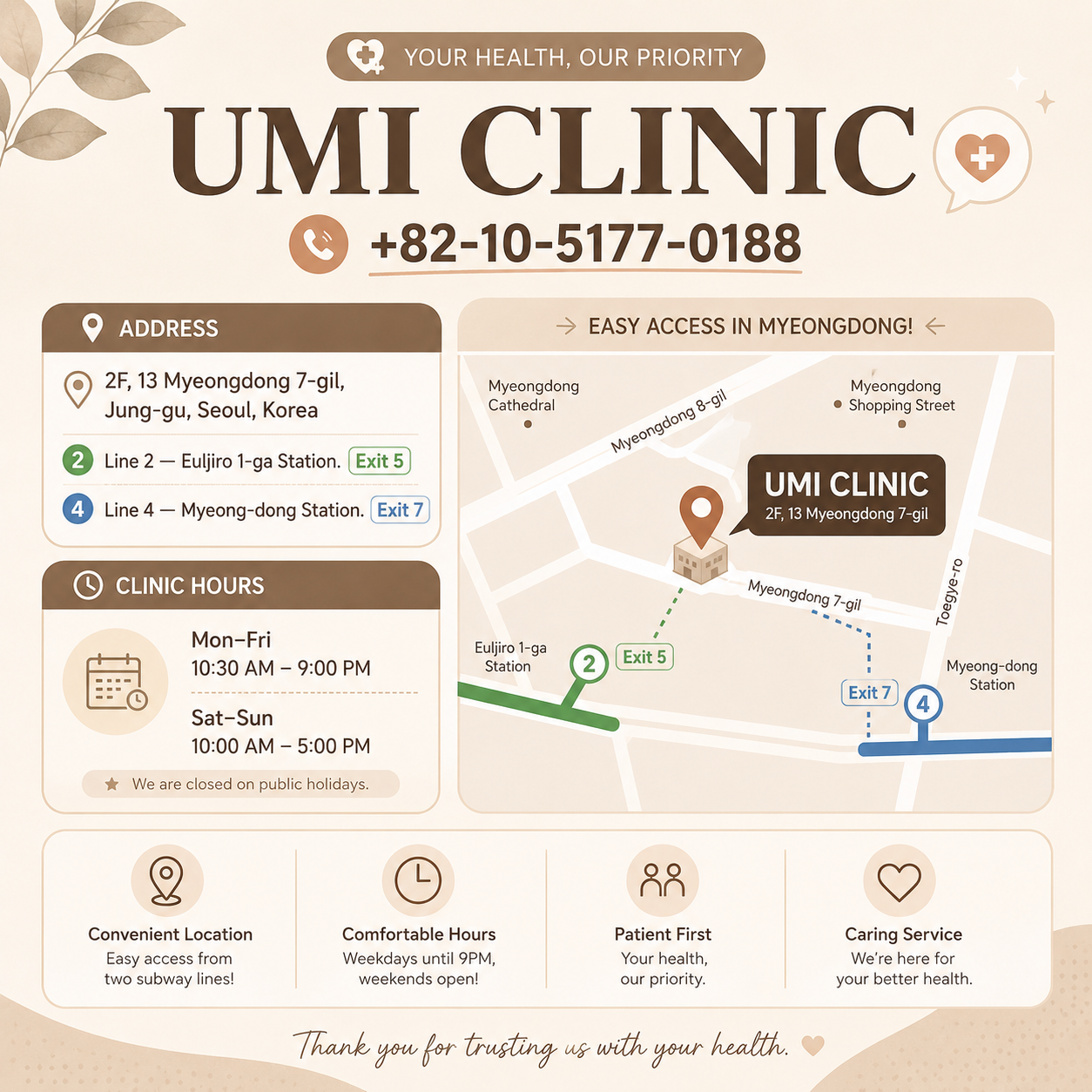
Umi Clinic (우미의원) · 13 Myeongdong 7-gil, Jung-gu, Seoul · Near Myeongdong Station Exit 6 · Directions & hours