Discreet care for breakouts under and between the breasts · Myeongdong, Seoul
Breast Acne Treatment in Myeongdong, Seoul
Spots under or between the breasts, often from heat, sweat and bra friction — assessed privately and treated gently for this sensitive area.
- Same price as locals
- English-speaking team
- Book on WhatsApp
- 中文 · 日本語
Quick answer
What causes acne on the breasts?
Breast acne is usually folliculitis or acne triggered by sweat, heat and friction where bra bands and underwires sit, or in the fold beneath the breasts. Humid weather, tight sports bras and heavy body lotions make it worse, and some bumps are fungal rather than bacterial.
The doctor examines the area privately to confirm the cause — including ruling out conditions such as intertrigo, hidradenitis or ingrown hairs — then uses gentle peels, light therapy or medicine. Leftover marks can be lightened with laser toning.
Medically reviewed by Dr. Yoon Jong-woo , Medical Director, Umi Clinic (Korean-licensed physician) · Updated October 2026. Results vary by person; the doctor explains risks, side effects and alternatives at consultation.
- Consult
- 15–30 min, private
- Session
- 20–40 min
- Downtime
- None to minimal
- Results
- Calmer skin in 2–6 weeks
- Approach
- Gentle, area-appropriate
- Pricing
- Same price as locals
Your visit
How Breast Acne works at Umi
Every visit is doctor-led and explained in English, from the first skin check to aftercare.
- Private assessment
The doctor examines the area with a chaperone available on request.
- Confirm the cause
Acne, fungal folliculitis, ingrown hairs or other conditions are distinguished.
- Gentle treatment
Mild peel, light therapy or prescribed topical or oral medicine.
- Prevention tips
Breathable, well-fitted bras, changing out of sweaty clothes and light skincare.
Before & after
How breast acne is calmed
Treating the true cause and reducing friction and sweat lets inflamed follicles settle and stops new spots forming.
Inflamed spots start to settle.
Fewer new spots with clothing changes.
Skin is calmer; marks begin to fade.
Is it right for you?
Who Breast Acne suits best
Good fit if you…
- Get spots under or between the breasts
- Notice flares with sweat, exercise or hot weather
- Have marks left from repeated spots
- Want a discreet, medical opinion
Consider another option if…
- You are pregnant or breastfeeding — options need adjusting
- You notice a new lump, nipple change or discharge — see a doctor promptly
- You have painful, draining lumps in folds — may be hidradenitis
- You have an active skin infection with fever
Recovery & results
What to expect, step by step
- First visit
Diagnosis and a gentle treatment or prescription.
- First week
Change clothing choices; keep the area dry.
- 2–6 weeks
Spots calm and fewer new ones appear.
- Maintenance
Prevention habits; occasional treatment in summer.
FAQ
Breast Acne questions
Is breast acne normal?
Yes, it is common, especially in hot and humid weather or with tight bras and exercise.
Is it acne or something else?
It can be acne, fungal folliculitis, ingrown hairs or friction rash. The doctor examines the area to tell the difference.
Can I have a chaperone?
Yes. You can ask for a chaperone during the examination.
How can I prevent it?
Choose breathable, well-fitted bras, change after exercise, and use a gentle, non-comedogenic body wash.
Do foreigners pay more?
No. International patients pay the same price as local patients at Umi Clinic.
Related at Umi Clinic
Explore next
Related body acne care
Treatments that help
Plan your visit
Ask about Breast Acne in English
Send a photo and your travel dates on WhatsApp — the team replies with a plan and a same-as-locals price.
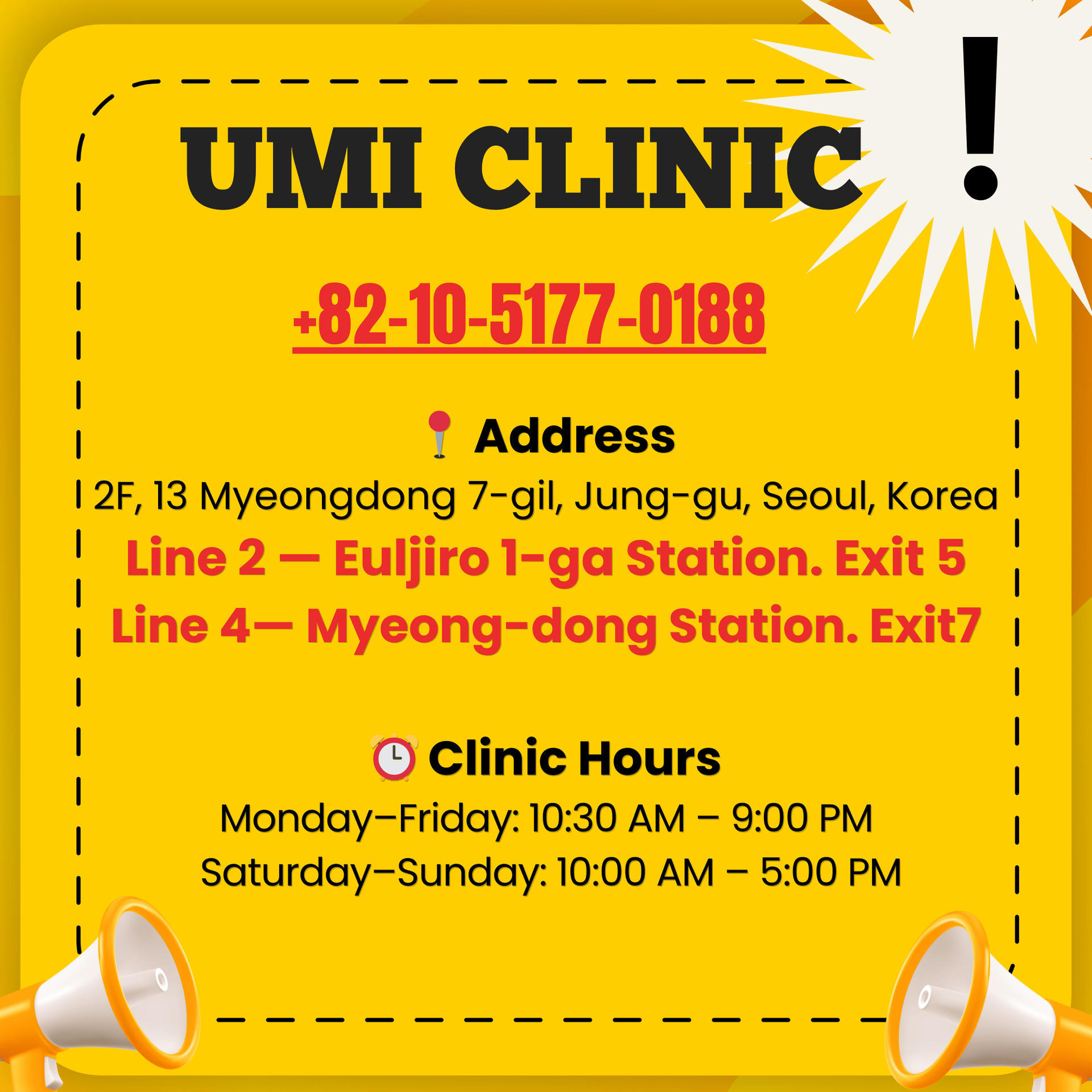
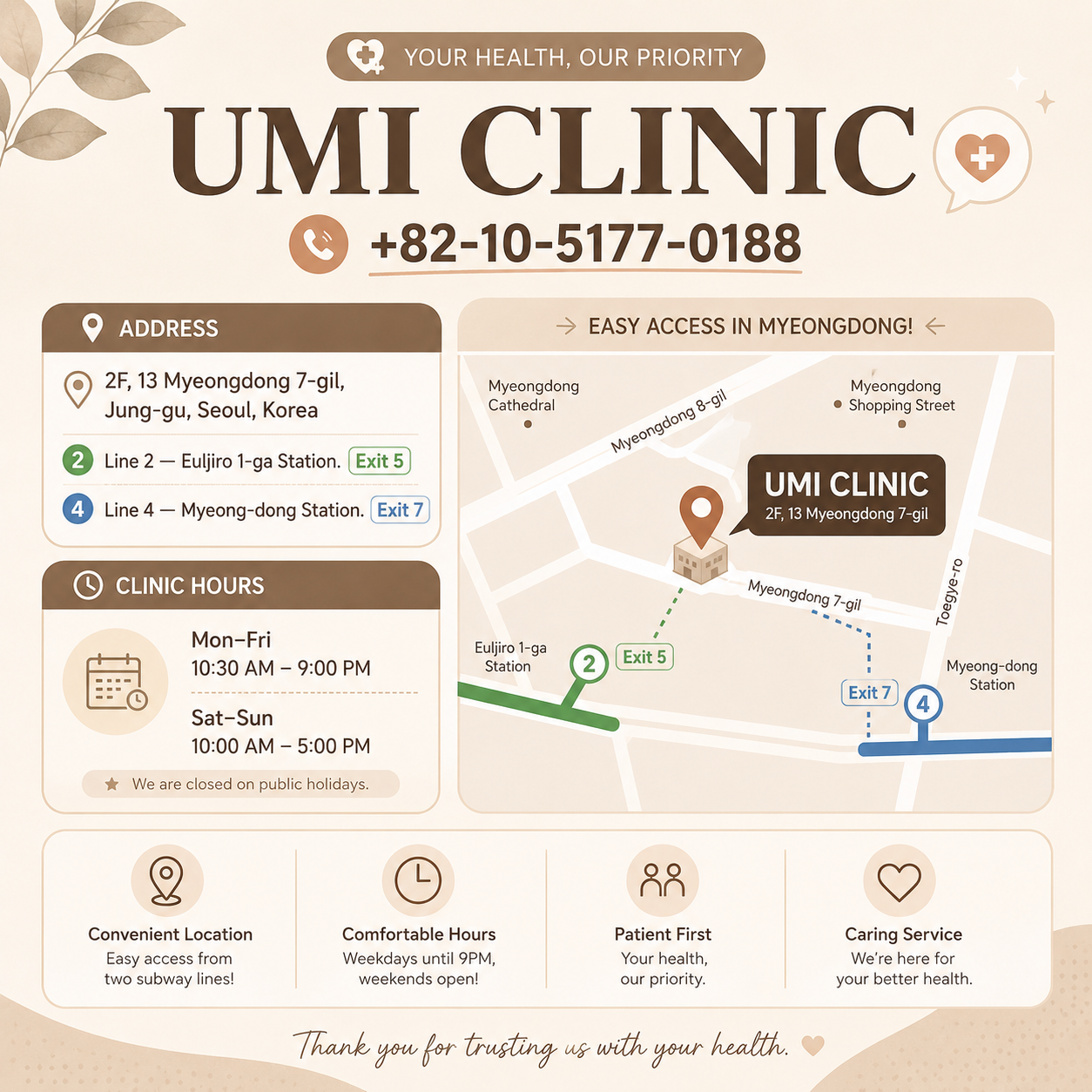
Umi Clinic (우미의원) · 13 Myeongdong 7-gil, Jung-gu, Seoul · Near Myeongdong Station Exit 6 · Directions & hours